Have you ever looked at your dashboard and wondered what all those warning lights actually mean?
Different Car Light Symbols are designed to alert you to your vehicle’s condition, but understanding them can help you avoid costly repairs, improve safety, and respond quickly when something needs attention.
From engine and battery warnings to brake, tire pressure, and temperature indicators, each symbol serves a specific purpose that every driver should know.
In this guide, you’ll discover what these dashboard lights mean, why they appear, and what actions you should take when they illuminate.
By the end, you’ll feel more confident recognizing important car light symbols and making informed decisions every time you get behind the wheel.
Quick Answer: What Are Different Car Light Symbols?
Different car light symbols are dashboard warning lights and indicator lights that tell you about your vehicle’s condition.
Some simply provide information, such as when your headlights or turn signals are on, while others warn about mechanical or safety problems like low oil pressure, engine trouble, or brake system issues.
Red symbols usually require immediate attention, yellow or amber symbols indicate a problem that should be checked soon, and green or blue symbols generally show that a system is operating normally.
What Are Different Car Light Symbols?
Different car light symbols are visual indicators built into your vehicle’s dashboard. They help communicate the status of important systems without requiring technical knowledge.
Modern vehicles use these symbols to alert drivers about engine performance, braking, lighting, tire pressure, battery charging, and many other functions. While many symbols are standardized across manufacturers, some may vary slightly depending on the vehicle brand and model.
Understanding these dashboard icons helps you:
- Prevent costly repairs
- Improve driving safety
- Detect problems early
- Know when immediate service is necessary
- Drive with greater confidence
Different Car Light Symbols Comparison Table
| Symbol | Main Meaning | Best Use |
| Check Engine Light | Engine or emissions issue | Schedule diagnosis |
| Oil Pressure Light | Low engine oil pressure | Stop engine immediately |
| Battery Warning Light | Charging system problem | Check battery or alternator |
| Brake Warning Light | Brake system issue | Inspect brakes immediately |
| ABS Light | Anti-lock braking system fault | Drive carefully and inspect |
| Tire Pressure Light | Low tire pressure | Inflate and inspect tires |
| Engine Temperature Light | Engine overheating | Stop and cool engine |
| Airbag Warning Light | Airbag system fault | Safety inspection |
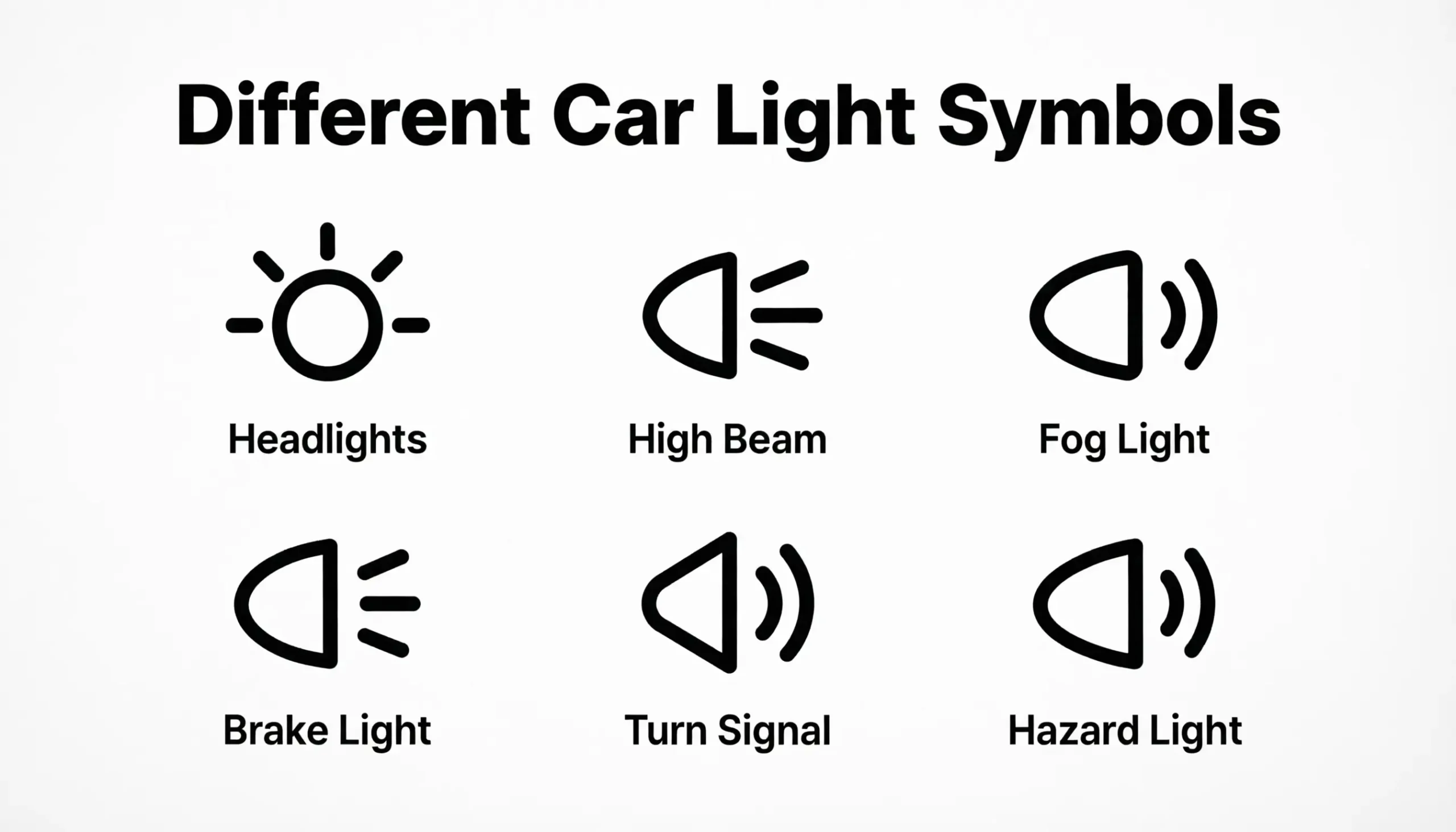
| Headlight Indicator | Headlights are active | Night driving |
| High Beam Indicator | High beams enabled | Rural roads |
| Fog Light Indicator | Fog lights active | Poor weather conditions |
| Turn Signal Indicator | Turn signal operating | Safe lane changes |
Top Different Car Light Symbols and Their Meanings
1. Check Engine Light: Engine Health Warning
The check engine light is one of the most recognized dashboard symbols. It may indicate anything from a loose fuel cap to a serious engine malfunction.
Sometimes the vehicle drives normally despite the warning, but ignoring it can allow a minor issue to become a costly repair. If the light flashes instead of remaining steady, reduce speed and seek professional service immediately.
Today, drivers often use an OBD-II scanner to read the diagnostic trouble code before visiting a mechanic.
Best for: Early engine diagnosis, maintenance planning, preventing major repairs.
2. Oil Pressure Light: Protect Your Engine
This symbol looks like an old-fashioned oil can with a dripping drop.
It warns that your engine is not receiving enough oil pressure. Continuing to drive with this light on can cause severe engine damage within minutes.
Safely pull over, turn off the engine, and check the oil level. If the oil level is normal but the light stays on, the vehicle should be inspected before driving further.
Best for: Preventing engine failure, emergency maintenance, protecting engine life.
3. Battery Warning Light: Charging System Problem
Many people assume this means the battery itself is bad, but it often indicates a charging system issue involving the alternator, wiring, or drive belt.
If ignored, your battery may eventually lose power completely, causing the vehicle to stop running.
Have the charging system tested as soon as possible.
Best for: Battery maintenance, alternator diagnosis, avoiding roadside breakdowns.
4. Brake Warning Light: Safety Comes First
A brake warning light should never be ignored.
It may indicate:
- Low brake fluid
- Worn brake components
- Parking brake engaged
- Hydraulic brake system fault
Because braking directly affects safety, have the issue inspected immediately if the light remains illuminated after releasing the parking brake.
Best for: Brake safety inspections, preventing accidents, routine maintenance.
5. ABS Warning Light: Anti-Lock Brake System Alert
The ABS light means the anti-lock braking system has detected a fault.
Normal braking usually still works, but the anti-lock feature may be unavailable during sudden stops or slippery road conditions.
Professional diagnosis ensures the system functions properly during emergencies.
Best for: Winter driving safety, emergency braking, vehicle inspections.
6. Tire Pressure Warning Light: Low Tire Pressure
This horseshoe-shaped symbol with an exclamation point indicates low tire pressure.
Driving on underinflated tires can reduce fuel economy, increase tire wear, and affect vehicle handling.
Check all tires with a pressure gauge and inflate them according to the manufacturer’s recommended PSI.
Best for: Tire maintenance, fuel efficiency, safer handling.
7. Engine Temperature Light: Overheating Warning
This symbol usually shows a thermometer above waves.
When illuminated, your engine is overheating. Continuing to drive may damage the head gasket or engine components.
Pull over safely, allow the engine to cool, and never remove the radiator cap while the engine is hot.
Best for: Preventing overheating, cooling system maintenance, avoiding engine damage.
8. Airbag Warning Light: Passenger Protection System
The airbag warning light indicates a fault within the supplemental restraint system.
Although the vehicle may drive normally, airbags may not deploy correctly during a collision.
Prompt inspection helps ensure maximum occupant protection.
Best for: Vehicle safety, inspection before long trips, accident protection.
9. Headlight Indicator: Low Beam Lights
This blue or green dashboard icon simply confirms that your low-beam headlights are turned on.
Unlike warning lights, this indicator serves as useful information rather than signaling a fault.
Using headlights properly improves visibility for everyone on the road.
Best for: Night driving, rain, low-light conditions.
10. High Beam Indicator: Maximum Visibility
The high beam indicator appears as a blue headlamp symbol.
High beams provide greater visibility on dark roads but should be switched off when approaching other vehicles to avoid blinding drivers.
Responsible use improves safety for everyone.
Best for: Rural roads, nighttime travel, low-traffic highways.
11. Fog Light Indicator: Better Vision in Poor Weather
Fog lights improve visibility during fog, heavy rain, or snow.
The dashboard symbol confirms they are activated.
Because fog lights are designed for limited visibility conditions, they should generally be turned off once weather improves.
Best for: Fog, snow, heavy rain, low-visibility driving.
12. Turn Signal Indicator: Direction Communication
The familiar green arrows flash whenever your turn signals or hazard lights are active.
If the arrow blinks unusually fast, one of the exterior bulbs may have failed.
Proper use of turn signals improves communication with other drivers and reduces accident risk.
Best for: Safe lane changes, turning, hazard warnings.
Best Different Car Light Symbols to Know First
While every dashboard symbol matters, these are the most important ones to recognize immediately:
- 🔴 Oil Pressure Light
- 🔴 Brake Warning Light
- 🔴 Engine Temperature Light
- 🟡 Check Engine Light
- Battery Warning Light
- 🟡 Tire Pressure Warning Light
Learning these first can help prevent serious mechanical damage and improve driving safety.
Best Different Car Light Symbols for Driver Awareness
Some dashboard lights appear frequently and every driver should understand them before getting behind the wheel.
The most useful symbols to memorize include engine warnings, tire pressure alerts, battery warnings, brake indicators, and coolant temperature lights. Together, they provide early notice of problems before they become expensive repairs.
Drivers who recognize these symbols often respond faster and avoid unnecessary breakdowns.
Different Car Light Symbols for Safety and Maintenance
Dashboard lights aren’t just warnings, they’re part of your vehicle’s communication system.
Understanding them helps you:
- Schedule maintenance on time
- Improve fuel efficiency
- Reduce repair costs
- Increase vehicle lifespan
- Drive more safely
Treat warning lights as helpful reminders rather than inconveniences.
Before Ignoring Any Dashboard Warning Light
Not every illuminated symbol means you must stop immediately, but every warning deserves attention.
Remember these general rules:
- Red lights usually require immediate action.
- Yellow or amber lights should be checked soon.
- Green and blue lights typically indicate normal operation.
Always consult your owner’s manual because symbols may differ slightly between vehicle manufacturers.
How to Respond to Different Car Light Symbols
When a dashboard light appears:
- Stay calm and don’t panic.
- Identify the color of the warning.
- Check your owner’s manual.
- Pull over safely if a red warning appears.
- Schedule service if the problem continues.
- Never ignore flashing warning lights.
Quick action often prevents larger repairs later.
FAQs
What is the most important dashboard warning light?
The oil pressure warning light is among the most critical because low oil pressure can severely damage the engine within minutes if ignored.
What do red dashboard symbols mean?
Red warning lights usually indicate serious safety or mechanical issues that require immediate attention. Pull over safely whenever appropriate.
What does the yellow check engine light mean?
A yellow check engine light indicates an engine or emissions problem. The vehicle may still operate normally, but diagnostic testing should be performed soon.
Which dashboard lights are safe to ignore?
Green and blue indicators generally show systems that are operating normally, such as headlights or turn signals. Warning lights should never be ignored.
Why is my tire pressure light on after filling my tires?
Some vehicles require the tire pressure monitoring system (TPMS) to reset after inflation. If the light remains on, a sensor or tire may need inspection.
Can I drive with the battery warning light on?
Driving may be possible for a short distance, but the charging system could fail at any time. Have the alternator and battery checked promptly.
What dashboard light means stop driving immediately?
Oil pressure, engine overheating, and major brake warnings are among the symbols that usually require stopping as soon as it is safe.
Do all cars use the same dashboard symbols?
Most modern vehicles follow international standards, but manufacturers sometimes use unique designs or additional indicators.
Final Thoughts
Understanding different car light symbols is one of the easiest ways to become a safer and more confident driver.
These dashboard indicators are designed to warn you before small problems become major repairs.
By learning what each light means and responding appropriately, you can protect your vehicle, reduce maintenance costs, and enjoy greater peace of mind every time you drive.
Discover More Post
- What Do Toyota RAV4 Dashboard Symbols and Meanings Show?
- Car Symbols Brands: Meanings Behind the Most Famous Logos
- Understanding Audi Dashboard Symbols and What They Tell You

Owen Bradford is an experienced American author at BlogShubb. He specializes in technology, online communities, and digital guides. His informative and well-researched articles help readers understand modern topics in a simple, practical, and engaging way.
 Ethan Caldwell
 Dylan Prescott