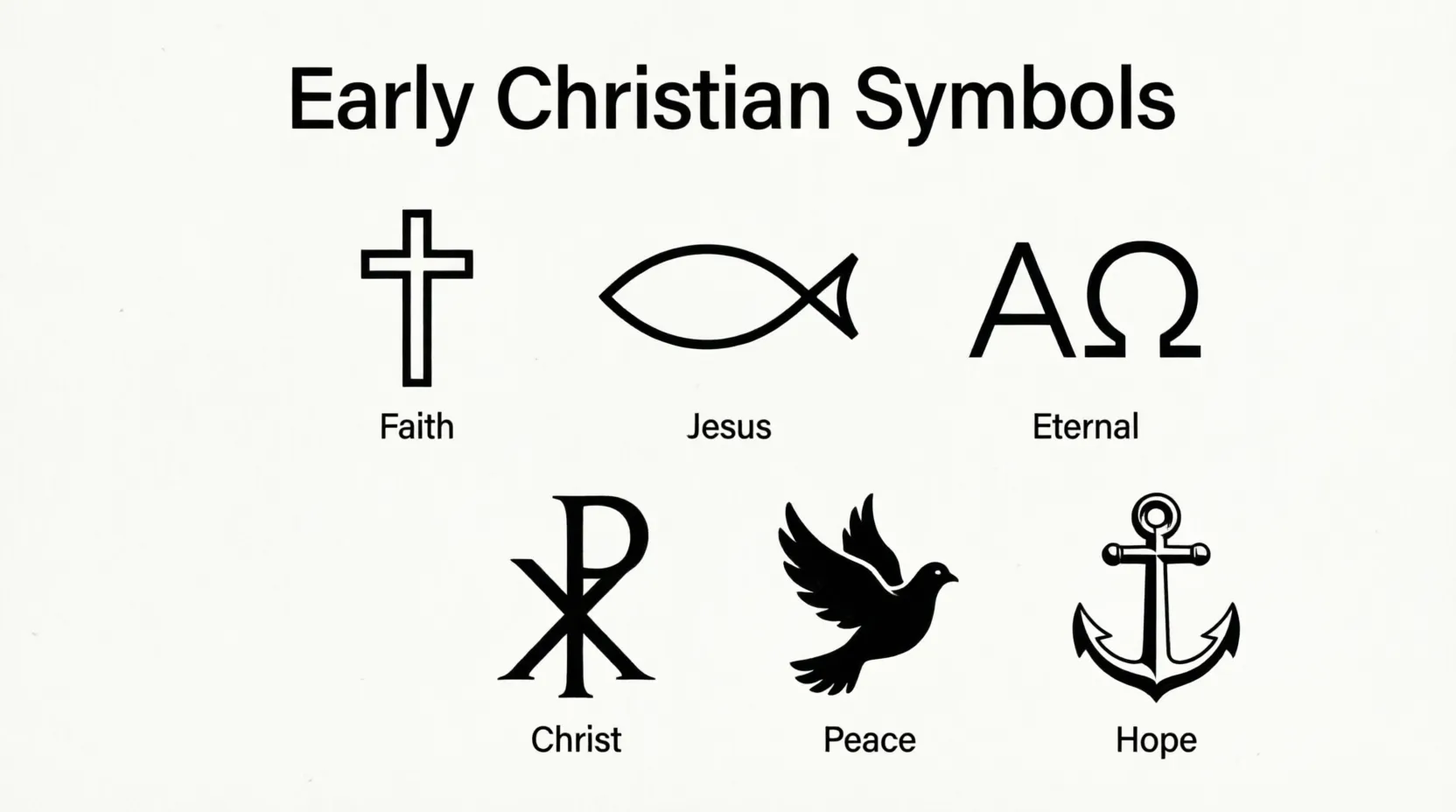
Have you ever wondered why Early Christian Symbols carried such deep meaning for the first followers of Jesus?
Long before Christianity became widely accepted, believers used simple yet powerful symbols to express their faith, share hope, and recognize one another during difficult times.
These sacred images were more than artistic designs they reflected biblical truths, spiritual identity, and the promise of salvation.
Understanding their history and symbolism can give you a richer appreciation of early Christian worship and the messages these signs still communicate today.
In this article, you’ll discover the meanings behind the most important Early Christian Symbols, their biblical connections, historical significance, and why they continue to inspire Christians around the world.
Quick Answer: What Symbol Represents Early Christianity?
The Ichthys (Fish) is the most recognized symbol of early Christianity.
Early Christians used it as a secret sign to identify fellow believers during times of persecution.
Other important early Christian symbols include the Chi-Rho, Cross, Anchor, Dove, Lamb, Good Shepherd, Alpha and Omega, Peacock, Vine, Ship, and Pelican, each carrying its own biblical and spiritual meaning.
What Are Early Christian Symbols?
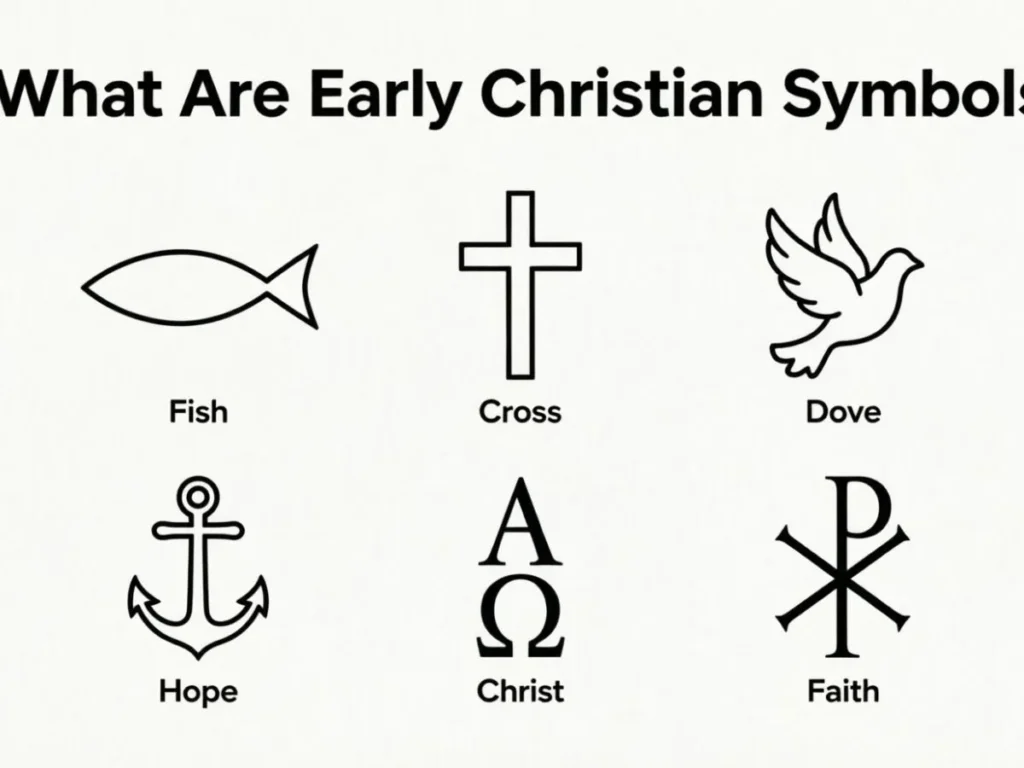
Early Christian symbols are visual signs used by the first followers of Jesus Christ to express their faith, teach biblical truths, and recognize other believers.
Many appeared in the first few centuries after Christ, especially when public worship was dangerous under parts of the Roman Empire.
Rather than relying on written words, Christians used familiar images from Scripture and everyday life.
These symbols reminded believers of Jesus’ death, resurrection, salvation, hope, eternal life, and God’s promises.
Although their meanings remain rooted in Christianity, some designs have also become popular in art, jewelry, architecture, tattoos, and church decoration.
Understanding their original context helps people appreciate them with greater respect.
Early Christian Symbols Comparison Table
| Symbol | Main Meaning | Best Use |
| Ichthys (Fish) | Faith in Christ | Tattoos, jewelry, decals |
| Chi-Rho | Christ’s victory | Church logos, artwork |
| Cross | Salvation | Tattoos, necklaces, worship |
| Anchor | Hope | Family art, tattoos |
| Dove | Holy Spirit, peace | Logos, artwork |
| Lamb | Jesus as the Lamb of God | Church designs |
| Good Shepherd | Christ’s care | Home décor, illustrations |
| Alpha and Omega | Eternal God | Wall art, jewelry |
| Peacock | Resurrection | Christian art |
| Vine | Spiritual growth | Family décor, churches |
| Ship | Church and faith journey | Ministry logos |
| Pelican | Sacrifice and love | Religious artwork |
Top Early Christian Symbols and Their Meanings
Ichthys (Fish): The Secret Sign of Believers
The Ichthys, often called the Christian fish, is perhaps the best-known symbol of the early church. The Greek word “Ichthys” forms an acronym meaning “Jesus Christ, Son of God, Savior.”
During periods of persecution, Christians reportedly used this simple drawing to identify one another discreetly.
The fish also reflects several Gospel stories, including Jesus calling fishermen as disciples and the miraculous feeding of the crowds.
Today, many Christians display the fish on cars, jewelry, clothing, and tattoos as a quiet expression of faith.
Best for: Tattoos, necklaces, car decals, bracelets, personal reminders
Chi-Rho: The Monogram of Christ
The Chi-Rho combines the first two Greek letters of Christ’s name: Chi (Χ) and Rho (Ρ). It became widely known after the Roman emperor Constantine associated it with Christianity in the fourth century.
This symbol reminds believers that Jesus is King and Savior. It appears frequently in ancient churches, manuscripts, mosaics, and Christian artwork.
Because of its elegant design, the Chi-Rho remains a favorite for church branding and religious gifts.
Best for: Church logos, stained glass, jewelry, Christian gifts, artwork
Cross: The Sign of Salvation
Today the cross is the central symbol of Christianity, reminding believers of Jesus’ sacrifice and resurrection. In the earliest centuries, however, Christians often used it more discreetly before it became openly displayed.
The cross represents forgiveness, redemption, God’s love, and victory over death. Different Christian traditions also use variations such as the Latin Cross, Greek Cross, and Celtic Cross.
Its timeless meaning makes it one of the most meaningful symbols in Christian life.
Best for: Tattoos, necklaces, churches, memorial art, personal devotion
Anchor: Hope That Holds Firm
The anchor appears in early Christian tombs and catacombs because it symbolized hope during difficult times. Hebrews 6:19 describes hope as “an anchor for the soul.”
Unlike a ship drifting in rough water, believers trusted God to keep them steady through suffering and uncertainty.
Today, the anchor remains popular among people seeking a reminder to stay grounded in faith.
Best for: Hope tattoos, family keepsakes, memorial jewelry, wall art
Dove: Peace and the Holy Spirit
The dove appears throughout the Bible, especially during Jesus’ baptism when the Holy Spirit descended like a dove. It also recalls Noah’s story, where the returning dove announced new life after the flood.
Early Christians viewed the dove as a sign of peace, purity, God’s presence, and spiritual renewal.
Its gentle appearance makes it suitable for both religious and artistic settings.
Best for: Baptism gifts, spiritual tattoos, logos, paintings, home décor
Lamb: Jesus, the Lamb of God
The lamb reflects one of the Bible’s most important titles for Jesus: the Lamb of God, who takes away the sins of the world.
Early Christians connected the lamb with sacrifice, innocence, redemption, and God’s saving plan. The image also echoes the Passover lamb in the Old Testament.
Churches often include this symbol in stained glass, communion art, and Easter celebrations.
Best for: Church artwork, Easter decorations, Christian illustrations, devotional gifts
Good Shepherd: Christ’s Loving Care
Images of Jesus carrying a sheep were common in early Christian art, especially in the Roman catacombs.
The Good Shepherd represents Christ’s compassion, guidance, protection, and willingness to seek those who are lost. It offers comfort during hardship and reminds believers that they are never abandoned.
Its caring message continues to resonate with families and churches today.
Best for: Family artwork, children’s ministry, wall décor, Christian illustrations
Alpha and Omega: God’s Eternal Nature
The Greek letters Alpha and Omega represent the beginning and the end, reflecting Jesus’ declaration in the Book of Revelation.
This symbol reminds Christians that God exists beyond time and remains faithful throughout every season of life.
Its clean, balanced appearance also works well in modern Christian design.
Best for: Jewelry, church signs, tattoos, Bible covers, artwork
Peacock: Resurrection and Eternal Life
Although many people associate peacocks with beauty, early Christians also linked them with eternal life. Ancient writers believed the peacock’s flesh did not decay quickly, leading it to symbolize immortality and resurrection.
Because of this belief, peacocks often appeared in early Christian mosaics and church decorations.
Today, they remain meaningful in traditional Christian art.
Best for: Religious mosaics, decorative art, church architecture, symbolic paintings
Vine: Growing in Christ
Jesus described Himself as the true vine in John’s Gospel. Early Christians embraced the vine as a picture of spiritual growth, unity, and dependence on Christ.
The image reminds believers that lasting fruit comes from remaining connected to Jesus.
Its flowing design also makes it attractive for artistic and decorative purposes.
Best for: Family art, churches, Christian gardens, wall décor
Ship: The Journey of Faith
The ship became a symbol of the Christian Church traveling safely through the storms of life. Just as Noah’s Ark preserved life, the Church was seen as a place of spiritual refuge.
Ancient Christian artists sometimes combined the ship with an anchor or cross to reinforce the message of hope.
The symbol encourages believers to trust God even during life’s uncertainties.
Best for: Ministry logos, educational materials, church artwork, leadership retreats
Pelican: Self-Sacrificing Love
According to a medieval Christian tradition, a pelican would feed its young with its own blood during famine. While this belief is not biologically accurate, Christians adopted the image as a symbolic reminder of Christ’s sacrificial love.
Because its meaning is symbolic rather than scientific, it is mainly found in older Christian art and church decoration.
Best for: Traditional church art, communion symbolism, religious illustrations
Best Early Christian Symbols for Tattoos
Many early Christian symbols translate beautifully into meaningful tattoo designs. Simple shapes often age well and remain recognizable for years.
Popular choices include:
- Ichthys (Fish)
- Chi-Rho
- Cross
- Anchor
- Dove
- Alpha and Omega
Small tattoos work well on the wrist, ankle, or forearm, while larger designs may combine several symbols with Bible verses or meaningful dates. Before choosing a tattoo, consider both its biblical meaning and your personal faith journey.
Best Early Christian Symbols for Logos and Design
If you’re designing a church logo, ministry brand, book cover, or Christian artwork, choose symbols that are simple and easy to recognize.
Excellent design choices include:
- Chi-Rho
- Cross
- Ichthys
- Dove
- Anchor
- Alpha and Omega
Clean lines and uncluttered designs help these symbols remain readable in print, websites, social media, and signage.
Best Early Christian Symbols for Family, Spiritual, or Personal Meaning
Different symbols speak to different life experiences.
- Anchor reminds families to remain hopeful during difficult seasons.
- Good Shepherd reflects loving care, protection, and guidance.
- Dove encourages peace and forgiveness.
- Cross centers life on Christ’s sacrifice.
- Vine reminds families to stay spiritually connected.
- Alpha and Omega reflects God’s faithfulness from beginning to end.
Many families incorporate these symbols into home décor, keepsake jewelry, prayer spaces, or anniversary gifts as lasting reminders of shared faith.
Before Using Cultural or Sacred Symbols
Many early Christian symbols have deep religious meaning that goes beyond decoration.
Before using them in tattoos, logos, clothing, or commercial products, take time to understand their biblical and historical background. Some traditions may interpret certain symbols differently, and respectful use helps preserve their spiritual significance.
Learning the story behind a symbol often makes it even more meaningful.
How to Choose the Right Symbol for Early Christianity
Choosing the right symbol depends on why you want to use it.
Consider these questions:
- Does the symbol reflect your personal faith?
- Is its historical meaning important to you?
- Will it work well as a tattoo or logo?
- Is the design simple enough to stay recognizable?
- Are you using it respectfully within its Christian context?
If you’re unsure, begin with timeless symbols such as the Cross, Fish, Anchor, or Chi-Rho because their meanings remain widely understood across many Christian traditions.
FAQs
What is the best symbol for early Christianity?
The Ichthys, or Christian fish, is generally considered the best-known symbol of early Christianity because it helped believers identify one another during periods of persecution and expressed faith in Jesus Christ.
What symbol represents Christian hope?
The anchor is the traditional Christian symbol of hope. Based on Hebrews 6:19, it reminds believers that faith remains secure even during life’s greatest challenges.
What is a good early Christian tattoo?
Simple tattoos such as the Cross, Ichthys, Chi-Rho, Anchor, or Alpha and Omega are meaningful choices. They are easy to recognize and each carries a rich biblical message.
Which early Christian symbol represents peace?
The dove is most closely connected with peace, the Holy Spirit, reconciliation, and new beginnings. It remains one of Christianity’s most gentle and widely recognized images.
Are early Christian symbols still used today?
Yes. Churches, ministries, artists, jewelers, and individual Christians continue using these symbols in worship, architecture, artwork, jewelry, tattoos, and educational materials because their spiritual meanings remain relevant.
Final Thoughts
The beauty of early Christian symbols lies in their ability to communicate faith through simple images that have inspired believers for centuries.
Whether you are exploring Christian history, choosing a meaningful tattoo, creating artwork, or deepening your understanding of biblical symbolism, knowing the story behind these timeless signs helps you appreciate their lasting message of hope, salvation, peace, and God’s faithful presence.
References
- The Holy Bible (especially John, Matthew, Hebrews, Revelation)
- BibleProject
- Encyclopaedia Britannica
- The Metropolitan Museum of Art
- The British Museum

Dylan Prescott is an experienced American writer at BlogShubb. He specializes in technology, digital trends, and online guides. His well-researched articles help readers understand complex topics in a simple, clear, and practical way.
 Owen Bradford
 Ethan Caldwell