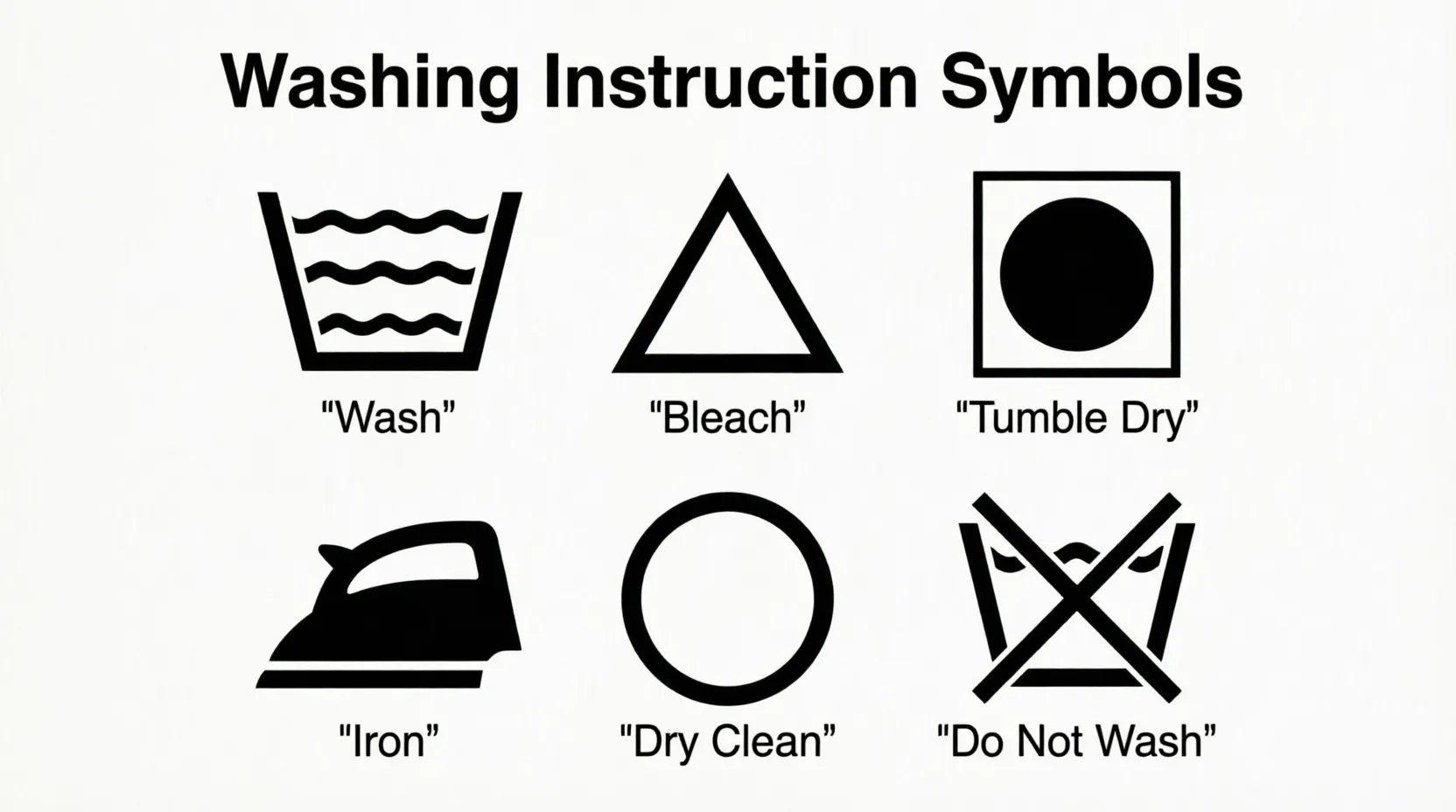
Have you ever looked at a clothing care label and wondered what all those tiny icons actually mean?
Understanding Washing Instruction Symbols Meaning can help you wash, dry, iron, and care for your clothes correctly, preventing shrinkage, fading, and fabric damage.
While these symbols may seem confusing at first, they follow a simple, universal system designed to make garment care easier.
In this guide, you’ll learn what the most common laundry symbols represent, why they matter, and how to read them with confidence.
Whether you’re caring for delicate fabrics or everyday clothing, knowing these care labels can help your favorite garments stay in great condition for much longer.
Quick Answer: What Symbol Represents Washing Instructions?
The wash tub symbol is the primary symbol used for washing instructions on clothing labels. It tells you whether an item can be machine washed, hand washed, or should not be washed with water at all. Extra marks, numbers, dots, and lines inside or below the tub provide specific washing temperatures and cycle recommendations.
What Are Washing Instruction Symbols Meaning?
Washing instruction symbols are standardized icons printed on clothing care labels. They give simple directions for washing, drying, bleaching, ironing, and professional cleaning.
These symbols help prevent:
- Shrinking
- Color fading
- Fabric damage
- Stretching
- Premature wear
Most clothing brands follow the international care labeling system developed by the International Organization for Standardization (ISO) and GINETEX, making these symbols recognizable worldwide.
While the symbols are standardized, people may interpret them differently depending on local laundry habits, fabric types, and manufacturer recommendations. Always follow the care label before trying alternative washing methods.
Washing Instruction Symbols Meaning Comparison Table
| Symbol | Main Meaning | Best Use |
| Wash Tub | Machine wash | Everyday clothing |
| Hand in Tub | Hand wash only | Wool, silk, lace |
| Crossed Wash Tub | Do not wash | Dry-clean-only fabrics |
| Wash Tub with Number | Maximum water temperature | Cotton, linen |
| Wash Tub with Dots | Water temperature guide | International labels |
| Single Line Under Tub | Permanent press cycle | Synthetic fabrics |
| Double Line Under Tub | Gentle cycle | Delicate garments |
| Triangle | Bleaching instructions | White clothing |
| Square with Circle | Tumble drying | Dryer-safe garments |
| Iron Symbol | Ironing instructions | Shirts, dresses, uniforms |
| Circle | Professional dry cleaning | Suits, coats |
| Twisted Cloth Crossed Out | Do not wring | Delicate fabrics |
Top Washing Instruction Symbols Meaning and Their Uses
Wash Tub: Machine Wash Safe
The plain wash tub is the most common laundry care symbol.
It simply means the garment is safe to wash in a washing machine.
Additional numbers or dots may specify the recommended water temperature.
Following this symbol helps preserve fabric quality while removing dirt and stains effectively.
Most everyday clothing, including cotton shirts, jeans, and towels, uses this symbol.
Ignoring the recommended settings may lead to shrinking or color loss.
Best for: Everyday clothing, cotton fabrics, household laundry, casual wear, work clothes
Hand in Wash Tub: Hand Wash Only
A hand inside the wash tub tells you the garment should be washed gently by hand rather than in a washing machine.
This symbol commonly appears on silk, lace, cashmere, and delicate knitwear.
Hand washing reduces friction, helping delicate fibers keep their shape and softness.
Use cool water and a mild detergent for the best results.
Best for: Silk garments, wool sweaters, lace clothing, delicate fabrics, luxury garments
Crossed-Out Wash Tub: Do Not Wash
A wash tub with an X through it means the garment should not be washed with water.
These items usually require professional dry cleaning because water may damage the fabric, remove special finishes, or change the garment’s shape.
Attempting to wash these items at home can permanently ruin them.
Best for: Formal suits, structured jackets, specialty fabrics, designer clothing
Wash Tub with Temperature Number
A number inside the wash tub indicates the highest safe water temperature.
Common examples include:
- 30°C
- 40°C
- 60°C
- 95°C
Lower temperatures protect colors and delicate fabrics, while higher temperatures help sanitize towels, bedding, and durable cotton items.
Following the recommended temperature also reduces energy waste and extends garment life.
Best for: Cotton clothing, towels, bedding, everyday laundry
Wash Tub with Dots
Instead of numbers, some labels use dots.
Generally:
- One dot = Cold wash
- Two dots = Warm wash
- Three dots = Hot wash
This system is common on international clothing labels and provides an easy visual guide regardless of language.
Always check whether dots appear inside washing or ironing symbols because their meanings differ slightly.
Best for: International garments, travel clothing, imported brands
Single Line Under Wash Tub
One horizontal line beneath the wash tub means the garment requires a permanent press or wrinkle-control cycle.
This cycle reduces agitation, making it suitable for fabrics that wrinkle easily, such as polyester blends and dress shirts.
Using the recommended cycle helps clothing maintain its shape and appearance.
Best for: Office wear, synthetic fabrics, wrinkle-resistant clothing
Double Line Under Wash Tub
Two lines under the wash tub indicate a very gentle wash cycle.
Delicate garments need slower spinning and minimal movement to avoid stretching or tearing.
Using a mesh laundry bag provides extra protection during machine washing.
Best for: Lingerie, knitwear, baby clothing, delicate garments
Triangle: Bleaching Instructions
The triangle symbol explains whether bleach may be used.
Common variations include:
- Plain triangle — Bleach allowed
- Triangle with diagonal lines — Non-chlorine bleach only
- Crossed triangle — Do not bleach
Bleach can brighten whites but may permanently damage colored or delicate fabrics if used incorrectly.
Best for: White clothing, stain removal, laundry whitening
Square with Circle: Tumble Dry
A circle inside a square indicates tumble drying instructions.
Additional dots show heat settings:
- One dot — Low heat
- Two dots — Medium heat
- Three dots — High heat
A crossed symbol means to avoid machine drying because heat could shrink or weaken the fabric.
Air drying remains the safest choice for many delicate garments.
Best for: Everyday laundry, towels, cotton clothing, durable fabrics
Iron Symbol
The iron icon tells you whether ironing is safe.
Dots indicate temperature levels:
- One dot — Low heat
- Two dots — Medium heat
- Three dots — High heat
A crossed iron means do not iron, often because heat may melt synthetic fibers or damage decorative finishes.
Always iron garments inside out when possible.
Best for: Dress shirts, uniforms, cotton clothing, linen garments
Circle: Professional Dry Cleaning
A plain circle means professional dry cleaning is recommended.
Letters inside the circle provide instructions for dry-cleaning professionals about suitable cleaning solvents.
This symbol helps preserve garments made from wool, silk, velvet, and structured materials.
Best for: Business suits, formal dresses, coats, expensive garments
Twisted Cloth with Cross: Do Not Wring
This less common symbol warns against twisting or wringing the fabric after washing.
Wringing can stretch delicate fibers, damage seams, and leave permanent wrinkles.
Instead, gently press excess water out using a clean towel before laying the garment flat to dry.
Best for: Wool, silk, knitwear, delicate fabrics, handmade garments
Best Washing Instruction Symbols for Laundry Education
Although laundry symbols are not typically used for tattoos or jewelry, they are excellent educational icons for:
- Laundry room wall art
- Washing machine guides
- Clothing care posters
- Household organization charts
- Fabric care reference cards
The most recognizable symbols include:
- Wash tub
- Hand wash
- Do not wash
- Tumble dry
- Iron
- Do not bleach
Best Washing Instruction Symbols for Logos and Design
Laundry businesses, clothing brands, and textile care companies often use simplified care symbols in their branding.
Good design choices include:
- Wash tub icon
- Water drop
- Shirt outline
- Sparkle with wash tub
- Tumble dryer icon
Simple, clean icons work best because customers recognize them instantly across websites, packaging, and social media.
Best Washing Instruction Symbols for Personal and Practical Use
Laundry care symbols are designed for practical communication rather than personal or spiritual symbolism.
They are especially useful for:
- Teaching children how to sort laundry
- Organizing household laundry routines
- Creating printable laundry guides
- Labeling storage bins
- Helping beginners care for clothing correctly
Understanding these symbols reduces accidental fabric damage and helps clothes stay in excellent condition.
Before Using Laundry Care Symbols Commercially
Most washing instruction symbols are standardized industry icons rather than artistic designs.
However, if you plan to use them in products, branding, educational materials, or commercial designs:
- Verify current licensing or trademark requirements where applicable.
- Avoid modifying standardized symbols in ways that could confuse consumers.
- Follow recognized textile care standards for accuracy.
- Remember that clothing manufacturers may include additional instructions specific to their products.
Using the correct symbols helps people care for garments safely and consistently.
How to Choose the Right Laundry Care Symbol
Choose symbols based on the garment’s actual care requirements rather than personal preference.
Keep these tips in mind:
- Read the entire care label before washing.
- Match water temperature to the recommended symbol.
- Select gentle cycles for delicate fabrics.
- Avoid bleach unless the label allows it.
- Air dry valuable garments whenever possible.
- When uncertain, choose the gentlest washing method.
Following care labels is one of the easiest ways to make clothing last longer.
FAQs
What is the most important washing instruction symbol?
The wash tub symbol is the most important because it tells you whether the garment can be washed with water and often includes temperature and cycle instructions that protect the fabric.
What do the dots inside washing symbols mean?
Dots usually indicate water temperature. One dot means cold, two dots mean warm, and three dots mean hot.
Some labels use numbers instead, showing the maximum recommended washing temperature in degrees Celsius.
Why should I follow clothing care labels?
Care labels help prevent shrinking, fading, stretching, and fabric damage.
Following them also extends the life of your clothes and helps maintain their original appearance after repeated washing.
What does the crossed-out wash tub mean?
A crossed wash tub means the garment should not be washed with water.
It typically requires professional dry cleaning or another cleaning method recommended by the manufacturer.
Can I ignore laundry symbols if I wash everything in cold water?
Cold water is gentler for many fabrics, but it does not replace all care instructions.
Some garments still require hand washing, dry cleaning, or air drying, so always check the full care label.
Final Thoughts
Understanding washing instruction symbols makes laundry easier, protects your favorite clothes, and helps you avoid costly mistakes.
Once you learn the basic care symbols, reading clothing labels becomes quick and simple.
Whether you’re washing everyday cotton shirts or delicate fabrics, following these symbols is one of the best ways to keep your wardrobe looking its best for years.
References
- International Organization for Standardization (ISO) – Textile care labeling standards
- GINETEX – International textile care labeling system
- American Cleaning Institute – Laundry care guidance
- Federal Trade Commission (FTC) – Care Labeling Rule

Owen Bradford is an experienced American author at BlogShubb. He specializes in technology, online communities, and digital guides. His informative and well-researched articles help readers understand modern topics in a simple, practical, and engaging way.
 Dylan Prescott
 Ethan Caldwell