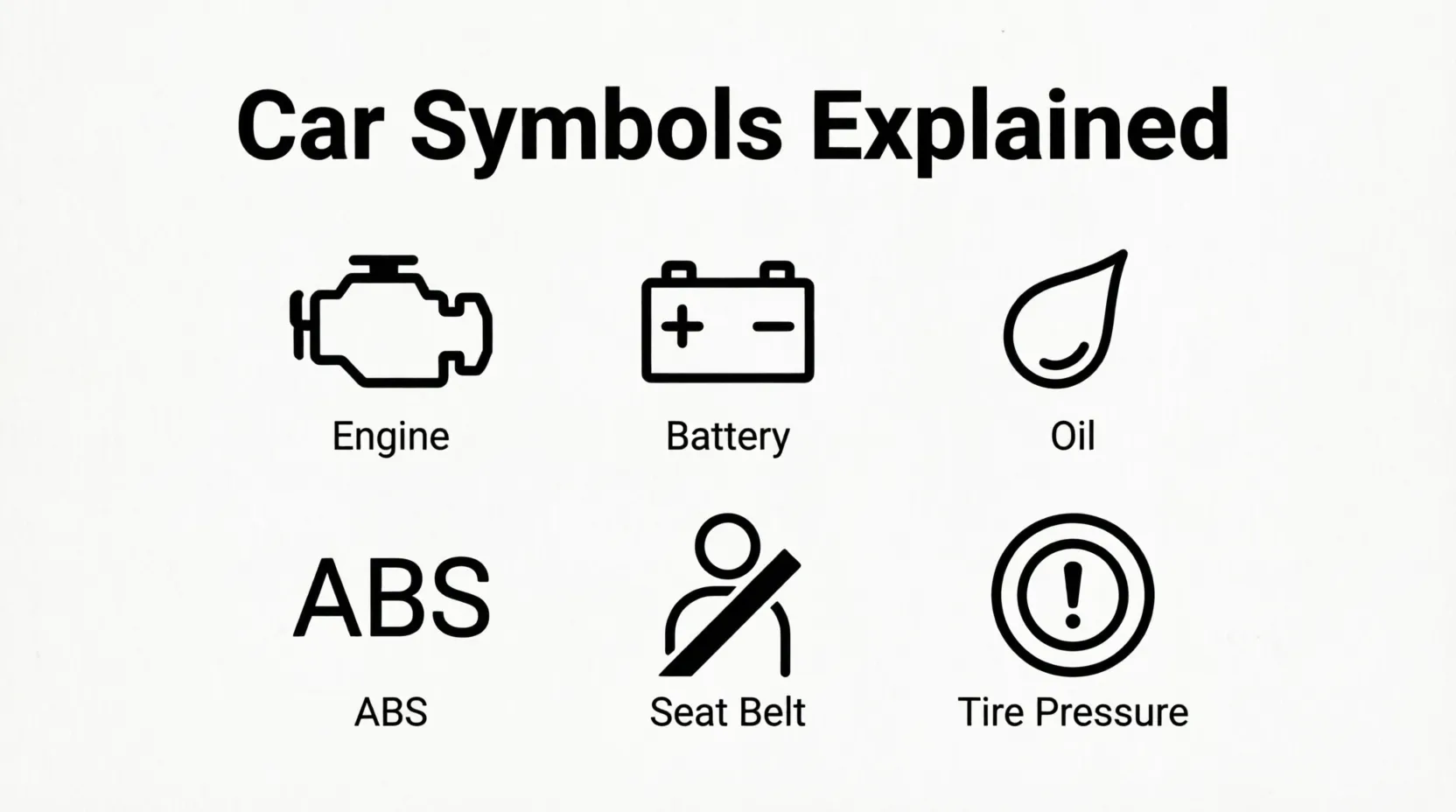
Have you ever seen a warning light or unfamiliar icon appear on your dashboard and wondered what it means?
Dashboard Car Symbols Explained helps you understand the different indicators your vehicle uses to communicate important information.
From engine warnings and safety alerts to maintenance reminders and system notifications, each symbol has a specific purpose that can guide your next step.
Knowing these car dashboard symbols can help you respond quickly, avoid unnecessary stress, and keep your vehicle running safely.
In this guide, you’ll discover the meanings behind common dashboard lights, what different colors indicate, and how to recognize which warnings need immediate attention.
Quick Answer: What Symbol Represents Dashboard Car Warnings?
The Check Engine Light is the most recognized dashboard car symbol. It alerts you that your vehicle’s engine or emissions system needs attention. However, other symbols such as the oil pressure warning, battery light, brake warning, and tire pressure indicator are equally important because they help protect your vehicle from damage and keep you safe on the road.
What Are Dashboard Car Symbols?
Dashboard car symbols are visual warning lights and indicators that appear on your vehicle’s instrument panel. They communicate information about your car’s systems, including the engine, brakes, tires, battery, airbags, and more.
These symbols help drivers recognize problems before they become serious. Their meanings are generally standardized across many vehicle brands, although some manufacturers add unique icons or colors.
In most vehicles:
- Green or blue lights indicate normal operation.
- Yellow or orange lights suggest caution or maintenance.
- Red lights warn of serious issues that require immediate attention.
Understanding these symbols can help you make better decisions, reduce repair costs, and improve road safety.
Dashboard Car Symbols Comparison Table
| Symbol | Main Meaning | Best Use |
| Check Engine Light | Engine or emissions issue | Diagnose engine problems |
| Oil Pressure Light | Low oil pressure | Prevent engine damage |
| Battery Warning Light | Charging system fault | Battery and alternator checks |
| Brake Warning Light | Brake system issue | Driving safety |
| Tire Pressure Light (TPMS) | Low tire pressure | Tire maintenance |
| Coolant Temperature Light | Engine overheating | Prevent overheating |
| ABS Warning Light | Anti-lock braking issue | Brake diagnostics |
| Airbag Warning Light | Airbag malfunction | Passenger safety |
| Seat Belt Reminder | Seat belt not fastened | Driver safety |
| Fuel Warning Light | Low fuel level | Refueling reminder |
| Traction Control Light | Stability control active/fault | Better vehicle handling |
| Cruise Control Indicator | Cruise control engaged | Highway driving |
Top Dashboard Car Symbols and Their Meanings
Check Engine Light: Engine Needs Attention
The Check Engine Light is one of the most common dashboard warnings. It can indicate anything from a loose fuel cap to a serious engine problem.
Since many issues trigger this light, using a diagnostic scanner is often necessary to identify the exact cause.
Ignoring this warning may reduce fuel efficiency or lead to costly repairs if the underlying issue worsens.
If the light flashes, stop driving as soon as it is safe because severe engine damage could occur.
Best for: Engine diagnostics, maintenance reminders, repair planning, vehicle health monitoring.
Oil Pressure Warning Light: Protect Your Engine
This symbol usually looks like an old-fashioned oil can. It warns that your engine isn’t receiving enough oil pressure.
Low oil pressure can quickly damage engine components because they rely on oil for lubrication. If this light stays on while driving, safely pull over, switch off the engine, and check the oil level.
Regular oil changes help prevent this warning from appearing.
Best for: Preventive maintenance, engine protection, oil level monitoring, long vehicle life.
Battery Warning Light: Charging System Problem
The battery warning light doesn’t always mean the battery is dead. It often signals a problem with the alternator, battery cables, or charging system.
If ignored, your vehicle may eventually lose electrical power and stop running. Have the charging system inspected promptly.
Routine battery inspections help avoid unexpected breakdowns.
Best for: Battery maintenance, alternator checks, electrical system monitoring, road trip preparation.
Brake Warning Light: Safety Comes First
The brake warning light is among the most important red dashboard symbols. It may indicate low brake fluid, worn brake components, or that the parking brake remains engaged.
Never ignore this warning. Braking performance may be reduced, increasing accident risk.
Have the braking system checked immediately if the light remains on after releasing the parking brake.
Best for: Brake safety, maintenance, emergency awareness, safe driving.
Tire Pressure Monitoring System (TPMS): Keep Tires Healthy
The TPMS symbol resembles a tire with an exclamation point.
It warns that one or more tires have low air pressure. Underinflated tires reduce fuel economy, affect handling, and wear unevenly.
Check tire pressure with a quality gauge and inflate according to your vehicle’s recommended PSI.
Best for: Tire maintenance, fuel savings, safer driving, longer tire life.
Coolant Temperature Warning Light: Prevent Overheating
This symbol usually shows a thermometer above waves.
It warns that your engine is overheating. Continuing to drive could seriously damage the engine.
Safely stop the vehicle, allow the engine to cool, and check the coolant level only after it has cooled completely.
Regular coolant maintenance helps prevent overheating.
Best for: Engine protection, cooling system maintenance, summer driving, long-distance travel.
ABS Warning Light: Anti-Lock Brake System
The ABS light indicates a fault in the Anti-lock Braking System.
Your regular brakes may still function, but emergency braking performance could be affected, especially on wet or slippery roads.
Professional diagnostics help identify faulty wheel sensors or ABS components.
Best for: Brake diagnostics, winter driving, emergency braking safety, maintenance.
Airbag Warning Light: Passenger Protection
The airbag symbol indicates a possible fault in your vehicle’s Supplemental Restraint System (SRS).
If illuminated, airbags may not deploy properly during a collision.
Because airbags are critical safety equipment, schedule service as soon as possible.
Best for: Vehicle safety, family protection, accident preparedness, routine inspections.
Seat Belt Reminder: Simple but Essential
This familiar symbol reminds occupants to fasten their seat belts.
Modern vehicles often include sensors for multiple seating positions, helping improve passenger safety.
Wearing seat belts dramatically reduces injury risk during accidents.
Best for: Family safety, everyday driving, young drivers, road trips.
Fuel Warning Light: Time to Refuel
The fuel pump icon indicates your fuel level is running low.
Although many vehicles can travel several miles after this light appears, avoid making a habit of driving with very little fuel because it may shorten fuel pump life.
Refuel whenever possible after this warning appears.
Best for: Fuel management, travel planning, avoiding breakdowns, daily commuting.
Traction Control Light: Better Grip on the Road
This symbol often shows a car with skid marks.
When flashing, it usually means the traction control system is actively helping maintain grip. If it stays on continuously, the system may require servicing.
This feature improves stability during rain, snow, or icy conditions.
Best for: Safe driving, slippery roads, winter conditions, vehicle stability.
Cruise Control Indicator: Comfortable Highway Driving
The cruise control indicator appears when the system is activated.
It helps maintain a constant speed, improving comfort during long highway trips while potentially increasing fuel efficiency.
Always remain alert even when cruise control is engaged.
Best for: Highway driving, long trips, fuel efficiency, comfortable driving.
Best Dashboard Car Symbols for Tattoos
Most dashboard symbols are designed for safety rather than artistic expression.
However, some drivers choose them as tattoos because they reflect their love for cars or meaningful life experiences.
Popular choices include:
- Check Engine Light
- Steering Wheel icon
- Speedometer
- Tire Pressure symbol
- Key symbol
- Battery icon
Simple dashboard-inspired tattoos work well as minimalist designs, while larger automotive tattoos can combine several icons into a creative mechanical theme.
Best Dashboard Car Symbols for Logos and Design
Dashboard symbols inspire modern, clean designs because they are instantly recognizable.
Great symbols for branding include:
- Speedometer
- Steering wheel
- Battery icon
- Tire symbol
- Engine icon
- Cruise control icon
Simple geometric lines make these symbols ideal for automotive businesses, repair shops, mobile apps, social media graphics, and educational materials. Easy-to-read designs create stronger visual recognition.
Best Dashboard Car Symbols for Family, Safety, and Personal Meaning
Although dashboard icons are technical, many also reflect important personal values.
- Seat Belt Symbol reminds families to put safety first.
- Brake Warning Light encourages careful decision-making.
- Fuel Symbol reminds us to stay prepared.
- Battery Icon can symbolize energy and resilience.
- Engine Light reminds people that small problems deserve attention before they become larger ones.
These interpretations make dashboard symbols meaningful reminders for responsible driving and everyday life.
Before Using Cultural or Sacred Symbols
Most dashboard car symbols are universal automotive icons rather than cultural or religious symbols. However, some custom dashboard graphics or decorative designs may borrow imagery from cultural traditions.
Before using any sacred or traditional symbol in a tattoo, logo, product, or artwork, take time to understand its original meaning. Respecting cultural and spiritual traditions helps prevent misunderstandings and ensures symbols are used thoughtfully. Meanings can vary across countries, communities, and belief systems.
How to Choose the Right Symbol for Dashboard Car Safety
Choosing the right dashboard symbol depends on your purpose.
If you’re learning about vehicle maintenance, focus on critical warning lights like the engine, oil, brakes, battery, and coolant symbols.
For tattoos or artwork, choose icons that have personal significance and simple, recognizable designs.
When creating educational materials or automotive branding, select symbols that are widely understood and visually clear. Always prioritize accurate meanings over decorative appeal.
FAQs
What is the most important dashboard car symbol?
The oil pressure warning, brake warning, and engine temperature lights are among the most critical because ignoring them can lead to severe engine damage or unsafe driving conditions.
What does the check engine light usually mean?
It signals a problem within the engine or emissions system.
Causes range from a loose gas cap to more serious mechanical issues that require professional diagnosis.
Which dashboard symbol means stop driving immediately?
Red warning lights, especially the oil pressure, engine temperature, or brake warning lights often require immediate attention. Pull over safely and inspect the problem before continuing.
What is the best dashboard car symbol tattoo?
The Check Engine Light and speedometer are popular choices among automotive enthusiasts because they are simple, recognizable, and meaningful to car lovers.
Are dashboard symbols the same on every vehicle?
Many symbols follow international standards, but manufacturers sometimes include unique icons or slightly different designs. Always consult your vehicle owner’s manual for exact meanings.
Which dashboard light indicates low tire pressure?
The Tire Pressure Monitoring System (TPMS) symbol, which looks like a tire with an exclamation point, warns that one or more tires need air.
What color dashboard lights require immediate attention?
Red dashboard lights usually indicate serious safety issues that need immediate action.
Yellow or orange lights generally suggest maintenance or caution, while green and blue lights indicate normal operation.
Can I continue driving with a warning light on?
It depends on the symbol. Some lights indicate routine maintenance, while others warn of serious mechanical problems.
If you’re unsure, safely stop and consult your owner’s manual or a qualified mechanic.
Final Thoughts
Understanding dashboard car symbols makes driving safer and less stressful.
These warning lights provide valuable information about your vehicle’s health, helping you catch small issues before they become expensive repairs.
By learning what each symbol means and responding appropriately, you can protect your car, improve safety, and enjoy greater peace of mind every time you get behind the wheel.
Discover More Post
- What Do Car Symbols Meanings Tell You About Your Vehicle?
- Sacred Geometry Symbols and Meanings: A Complete Guide(2026)
- Understanding Audi Dashboard Symbols and What They Tell You

Dylan Prescott is an experienced American writer at BlogShubb. He specializes in technology, digital trends, and online guides. His well-researched articles help readers understand complex topics in a simple, clear, and practical way.
 Ethan Caldwell