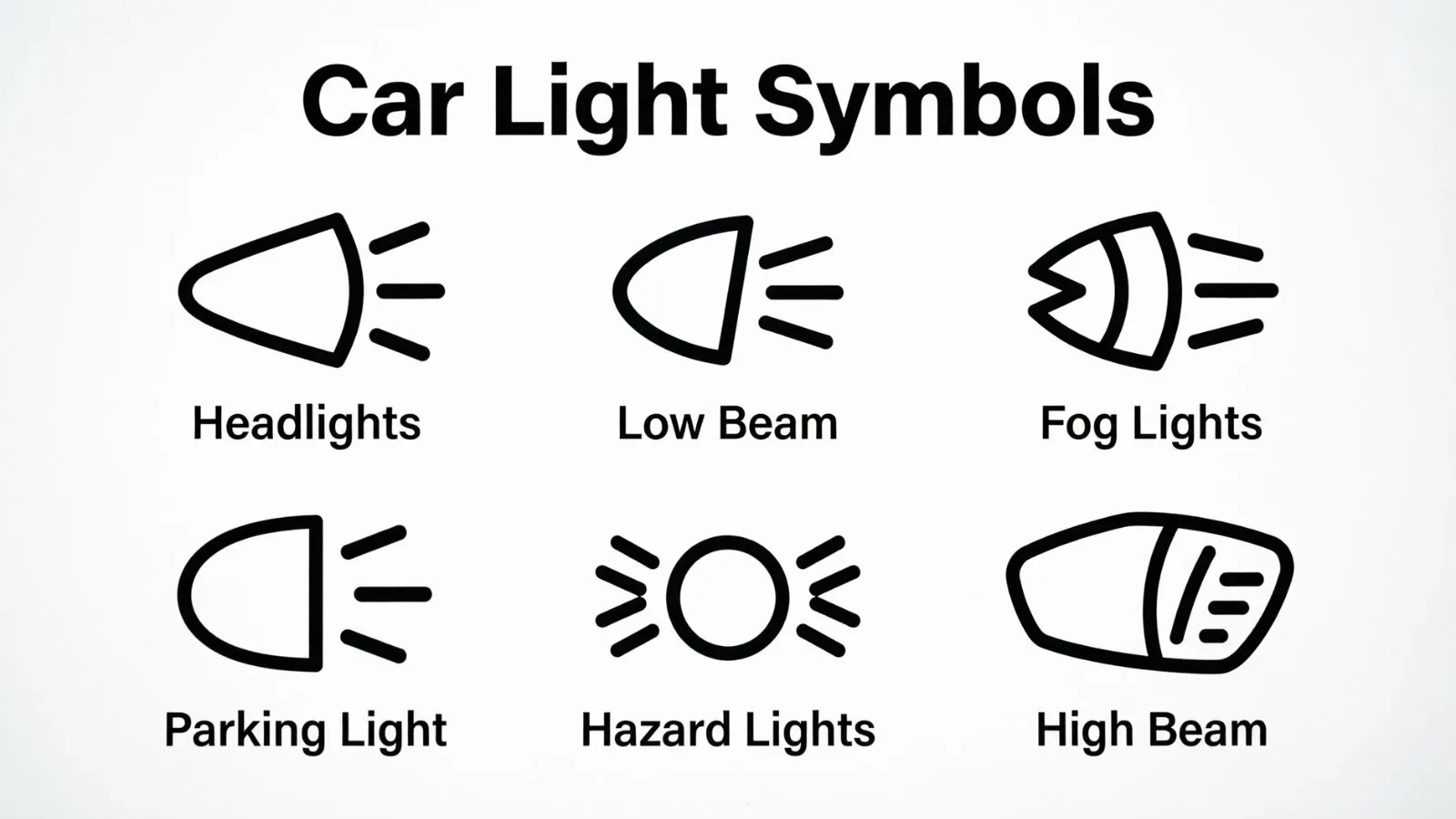
Have you ever noticed a warning light appear on your dashboard and wondered what it was trying to tell you?
Understanding Car Lights Symbols Meaning is essential because these dashboard indicators are designed to alert you to your vehicle’s condition before a small issue becomes a costly repair or a safety risk.
From engine and brake warnings to battery, oil, and tire pressure symbols, each light has a specific purpose that every driver should know.
In this guide, you’ll discover what the most common car light symbols mean, why they appear, and when you should take action, helping you drive with greater confidence and avoid unnecessary stress on the road.
Quick Answer: What Do Car Light Symbols Mean?
Car light symbols are dashboard indicators that tell you about your vehicle’s condition. They provide important information about safety systems, engine performance, maintenance needs, and potential problems.
Generally:
- Red lights = Stop and check immediately.
- Yellow or amber lights = Warning that needs attention soon.
- Green or blue lights = A system is active and working normally.
Understanding these symbols helps you make safer driving decisions and avoid costly damage.
What Are Car Lights Symbols Meaning?
Car dashboard light symbols are visual alerts built into your vehicle’s instrument cluster. Instead of displaying long text messages, manufacturers use universal icons so drivers can quickly recognize important warnings regardless of language.
These symbols may indicate:
- Safety system alerts
- Engine problems
- Maintenance reminders
- Lighting status
- Driving assistance systems
- Fluid levels
- Tire pressure
Although many dashboard symbols follow international standards, some designs vary slightly depending on the manufacturer. Always refer to your owner’s manual if You aree unsure about a specific icon.
Car Lights Symbols Meaning Comparison Table
| Symbol | Main Meaning | Best Use |
| Check Engine | Engine or emissions issue | Diagnose vehicle problems |
| Battery Warning | Charging system fault | Prevent battery failure |
| Oil Pressure | Low engine oil pressure | Protect engine |
| Brake Warning | Brake system issue | Safety inspection |
| Tire Pressure (TPMS) | Low tire pressure | Tire maintenance |
| Engine Coolant Temperature | Engine overheating | Prevent engine damage |
| ABS Warning | Anti-lock braking system fault | Brake safety |
| Airbag Warning | Airbag system malfunction | Passenger safety |
| Fuel Warning | Low fuel level | Refueling reminder |
| Seat Belt Reminder | Seat belt not fastened | Occupant safety |
| High Beam Indicator | High beams activated | Night driving |
| Fog Light Indicator | Fog lights are on | Low-visibility driving |
Top 12 Car Lights Symbols Meaning and Their Meanings
Check Engine Light: Engine Performance Warning
The check engine light is one of the most recognized dashboard symbols. It can indicate anything from a loose gas cap to a more serious engine or emissions problem.
If the light stays solid, schedule a diagnostic check as soon as possible. If it flashes, reduce speed and seek professional assistance immediately, as continued driving could damage the engine.
Today, this symbol is commonly associated with vehicle diagnostics and maintenance.
Best for: Routine maintenance, engine diagnostics, emissions issues, repair reminders, vehicle health monitoring.
2. Battery Warning Light: Charging System Problem
This symbol looks like a battery with plus and minus signs. It doesn’t always mean the battery itself is bad. Instead, it often points to a charging system issue involving the alternator, battery cables, or drive belt.
Ignoring this warning could leave you stranded if the battery loses its charge.
Best for: Battery inspections, alternator testing, electrical system checks, roadside prevention.
3. Oil Pressure Warning Light: Protect Your Engine
This oil can-shaped icon warns that your engine’s oil pressure has dropped below safe levels.
Low oil pressure can quickly cause severe engine damage. Pull over safely, switch off the engine, and check the oil level before driving further.
Never ignore this warning, even if the engine seems to run normally.
Best for: Oil maintenance, engine protection, emergency response, vehicle longevity.
4. Brake Warning Light: Brake System Alert
Usually shown as an exclamation mark inside a circle or the word “BRAKE,” this warning indicates a brake system issue.
Possible causes include:
- Parking brake engaged
- Low brake fluid
- Brake system malfunction
Because brakes are essential for safety, have the vehicle inspected immediately if the warning remains on.
Best for: Brake inspections, fluid checks, safety maintenance, emergency awareness.
5. Tire Pressure Monitoring System (TPMS): Low Tire Pressure
The TPMS light resembles a horseshoe with an exclamation mark.
Low tire pressure affects:
- Fuel economy
- Tire lifespan
- Vehicle handling
- Braking performance
Inflate tires to the recommended pressure listed on the driver’s door sticker and reset the system if necessary.
Best for: Tire maintenance, fuel savings, safer driving, preventing tire wear.
6. Engine Coolant Temperature Light: Overheating Warning
A thermometer over waves indicates that your engine is overheating.
Continuing to drive with this warning may cause severe engine damage.
Safely stop the vehicle, allow the engine to cool, and check coolant levels only after the engine has cooled completely.
Best for: Cooling system maintenance, preventing overheating, engine protection.
7. ABS Warning Light: Anti-Lock Brake System
The ABS symbol means there’s a fault with the anti-lock braking system.
Your normal brakes may still function, but the anti-lock feature may not work during sudden braking, especially on slippery roads.
Professional diagnosis is recommended.
Best for: Brake diagnostics, winter driving preparation, safety inspections.
8. Airbag Warning Light: Supplemental Restraint System
The airbag icon indicates a problem with your vehicle’s supplemental restraint system.
This could mean airbags may not deploy correctly during an accident.
Although the vehicle may still drive normally, this issue should be repaired promptly for maximum passenger protection.
Best for: Vehicle safety inspections, passenger protection, accident preparedness.
9. Fuel Warning Light: Low Fuel Reminder
The fuel pump symbol appears when your fuel level becomes low.
Although not an emergency warning, repeatedly driving with very little fuel can stress the fuel pump over time.
Refuel as soon as practical to avoid running out unexpectedly.
Best for: Fuel planning, trip preparation, avoiding breakdowns.
10. Seat Belt Reminder: Occupant Safety
This symbol reminds the driver or passengers to fasten their seat belts.
Modern vehicles often include sensors that detect occupied seats and activate both visual and audible reminders until belts are secured.
It’s one of the simplest yet most effective safety indicators.
Best for: Daily driving, family safety, passenger awareness.
11. High Beam Indicator: Headlight Status
Unlike warning lights, this blue symbol simply shows that your high beams are active.
Remember to switch to low beams when approaching other vehicles to avoid blinding other drivers.
Best for: Night driving, highway travel, visibility awareness.
12. Fog Light Indicator: Low-Visibility Assistance
This green or amber icon tells you your front or rear fog lights are switched on.
Fog lights improve visibility during heavy fog, rain, or snow but should generally be turned off once normal visibility returns.
Best for: Foggy conditions, rain, snow, safer nighttime driving.
Best Car Lights Symbols Meaning for Driver Education
Dashboard warning lights are not tattoo or decorative symbols they are practical safety indicators. The most important ones every driver should recognize include:
- Check Engine Light
- Oil Pressure Warning
- Brake Warning
- Battery Warning
- Tire Pressure Warning
- Coolant Temperature Warning
Learning these symbols can improve driver confidence and help prevent expensive repairs.
Best Car Lights Symbols Meaning for Vehicle Manuals and Automotive Design
Dashboard icons are designed to be:
- Simple
- Easy to recognize
- Consistent across manufacturers
- Visible in all lighting conditions
- Understandable without reading text
These characteristics make them effective not only in vehicles but also in automotive apps, repair guides, maintenance posters, educational materials, and driver training resources.
Best Car Lights Symbols Meaning for Safety and Personal Awareness
Understanding dashboard symbols benefits every driver, If You aree commuting daily or taking long road trips.
Knowing these indicators helps you:
- Respond quickly to emergencies
- Prevent major mechanical failures
- Schedule maintenance before problems worsen
- Drive more confidently
- Keep passengers safer
Rather than memorizing every icon, focus first on the red and amber warning lights that require immediate attention.
Before Interpreting Dashboard Symbols
Although many dashboard warning lights follow international standards, manufacturers sometimes use unique designs or combine multiple alerts into one display.
Always remember:
- Meanings can vary slightly between vehicle brands.
- Read your owner’s manual for model-specific explanations.
- Don’t ignore flashing red warning lights.
- If multiple warnings appear together, professional diagnosis may be necessary.
Using the correct interpretation helps avoid unnecessary repairs and improves road safety.
How to Choose the Right Response to Car Dashboard Warning Lights
When a dashboard light appears, avoid guessing.
Instead:
Consider the Color
- Red = Stop safely if necessary.
- Yellow = Schedule inspection soon.
- Green or Blue = Information only.
Observe Vehicle Behavior
Notice If the engine feels rough, brakes differently, or unusual sounds appear.
Check Basic Items
Look at:
- Oil level
- Tire pressure
- Fuel level
- Coolant level (after cooling)
Read the Owner’s Manual
Your manual explains symbols specific to your vehicle model.
Seek Professional Diagnosis
If the warning remains after basic checks, have the vehicle inspected by a qualified technician.
FAQs
What is the most important car dashboard warning light?
The oil pressure warning light is among the most critical because low oil pressure can quickly cause severe engine damage. Red brake and engine temperature warnings also require immediate attention.
What does the yellow check engine light mean?
A yellow check engine light usually indicates an engine or emissions issue. The vehicle may still be drivable, but a diagnostic scan should be performed as soon as possible.
Which dashboard lights require you to stop immediately?
Red warning lights such as oil pressure, engine overheating, brake system failure, or charging system warnings should never be ignored. Stop safely and investigate the problem before continuing.
Is it safe to drive with the TPMS light on?
If the tire pressure warning light appears, check all tires promptly. Driving with underinflated tires reduces handling, increases tire wear, and may increase the risk of a blowout.
Why does my battery warning light come on while driving?
A battery warning light usually indicates a charging system problem rather than a dead battery. Common causes include a failing alternator, damaged wiring, or a worn drive belt.
What do green dashboard lights mean?
Green dashboard lights usually indicate that a feature is operating normally, such as headlights, turn signals, cruise control, or fog lights. They are informational rather than warning indicators.
Do all cars use the same dashboard symbols?
Most vehicles use similar internationally recognized symbols, but manufacturers sometimes customize icon designs or add model-specific indicators. Always check your owner’s manual for exact meanings.
Can I reset warning lights myself?
Some maintenance reminders can be reset after servicing, but warning lights related to engine, brakes, airbags, or ABS should only be cleared after the underlying problem has been properly repaired.
Final Thoughts
Understanding car lights symbols meaning can make you a safer and more informed driver.
Dashboard warning lights are your vehicle’s way of communicating important information before small issues become major problems.
By learning the most common symbols, recognizing the difference between informational and warning lights, and responding appropriately, you’ll protect both your vehicle and everyone riding in it.
A few minutes spent learning these icons today can save you significant time, money, and stress in the future.
Discover More Post
- What Are Status Symbols and Why Do They Matter?
- Understanding Technology Symbols and Their Everyday Meanings
- What Do Social Media Chat Dating App Notification Symbols?

Dylan Prescott is an experienced American writer at BlogShubb. He specializes in technology, digital trends, and online guides. His well-researched articles help readers understand complex topics in a simple, clear, and practical way.
 Ethan Caldwell