
Have you ever wondered why certain Jewish symbols have remained powerful across thousands of years?
Jewish Symbols and Meanings reveal rich layers of faith, history, identity, and tradition that continue to inspire people around the world.
From well-known emblems to lesser-known sacred signs, each symbol carries a unique story shaped by Jewish beliefs, cultural heritage, and religious practice.
If you are exploring their spiritual significance, historical background, or modern-day use, understanding these symbols offers a deeper appreciation of their lasting importance.
In this guide, you shall discover what the most meaningful Jewish symbols represent, how they developed over time, and why they continue to hold a special place in Jewish life and beyond.
Quick Answer:
The Star of David (Magen David) is the best-known symbol associated with Judaism and the Jewish people.
It represents Jewish identity, unity, heritage, and faith.
While it is widely recognized today, other important Jewish symbols including the Menorah, Chai, Hamsa, and Lion of Judah also carry deep religious, historical, and cultural meaning.
What Are Jewish Symbols and Meanings?
Jewish symbols are visual signs that express the beliefs, traditions, history, and values of Judaism.
Some come directly from the Hebrew Bible, while others developed through centuries of Jewish culture and religious practice.
These symbols can represent:
- Faith in God
- Divine protection
- Life and hope
- Wisdom
- Peace
- Strength
- Jewish identity
- Family heritage
It’s important to remember that meanings may vary among different Jewish communities, including Orthodox, Conservative, Reform, and secular Jews. Some symbols are primarily religious, while others have become cultural icons recognized worldwide.
Jewish Symbols and Meanings Comparison Table
| Symbol | Main Meaning | Best Use |
| Star of David | Jewish identity and unity | Jewelry, logos, tattoos |
| Menorah | Light, wisdom, God’s presence | Home décor, religious art |
| Chai | Life and blessing | Necklaces, gifts, tattoos |
| Hamsa | Protection and peace | Jewelry, home decoration |
| Lion of Judah | Courage and leadership | Tattoos, family crests |
| Torah Scroll | God’s teachings | Educational designs |
| Tablets of the Law | Ten Commandments | Religious artwork |
| Dove | Peace and hope | Family art, logos |
| Pomegranate | Righteousness and abundance | Jewelry, decorative art |
| Tree of Life | Wisdom and spiritual growth | Tattoos, wall art |
| Mezuzah | Faith and protection | Home entrance |
| Hebrew Letter Shin | God’s name and blessing | Spiritual jewelry |
Top Jewish Symbols and Meanings
Star of David: Symbol of Jewish Identity
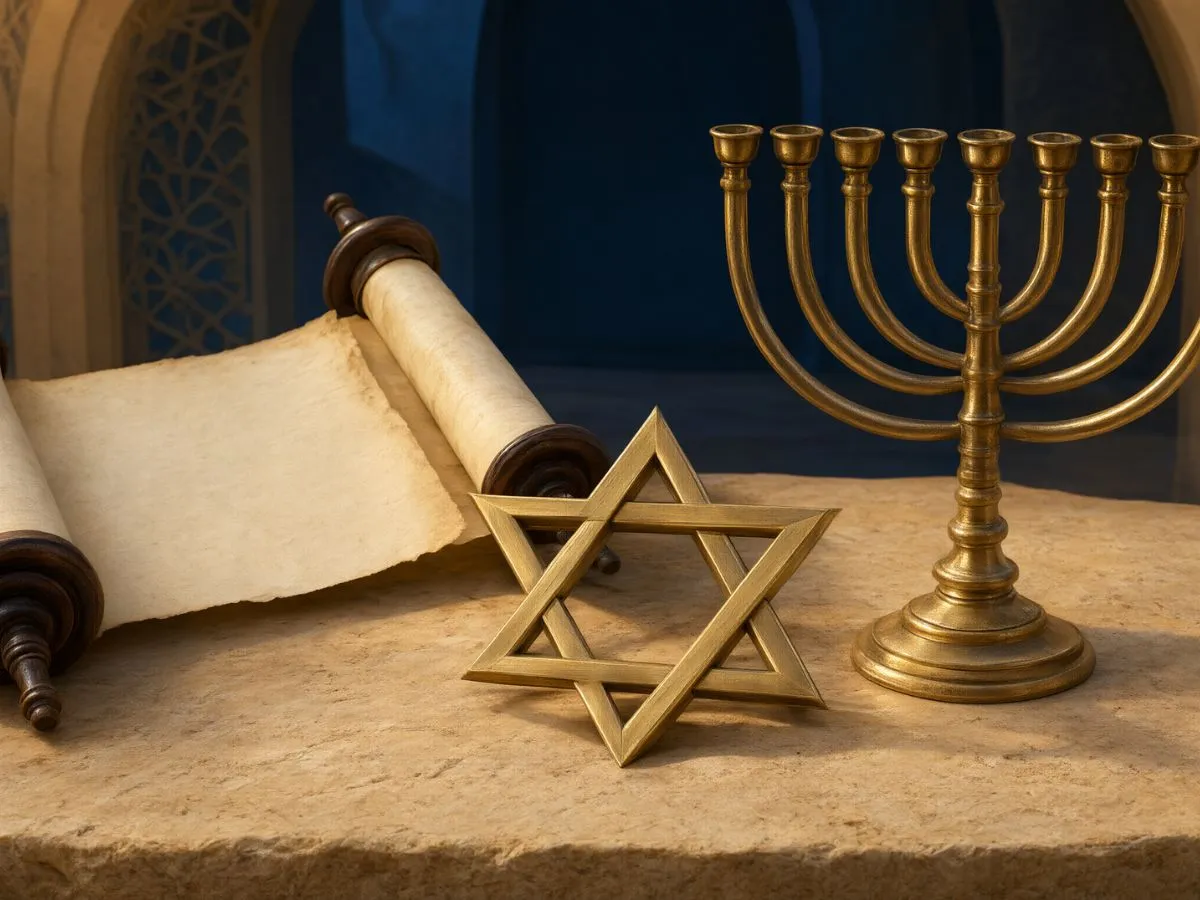
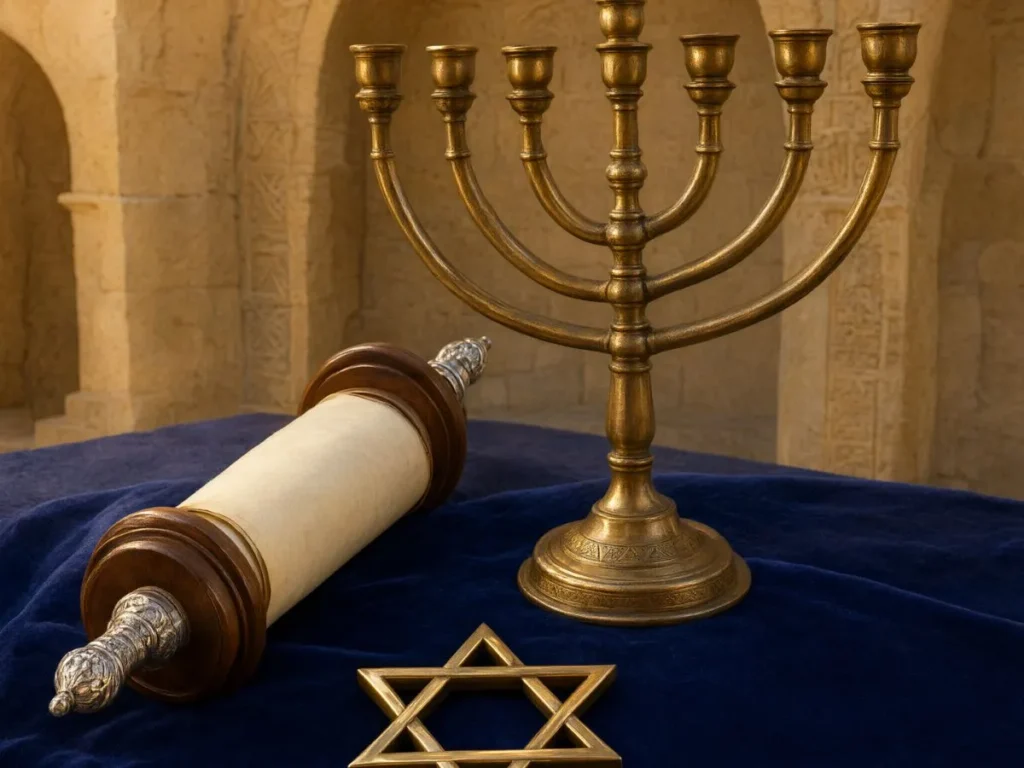
The Star of David, called Magen David in Hebrew, is the most recognized Jewish symbol.
Although it became widely associated with Judaism during the Middle Ages, today it serves as a worldwide emblem of Jewish identity and unity.
Many people view the two overlapping triangles as a reminder of the relationship between God and humanity.
Others see balance, harmony, or spiritual protection in its shape. It also appears on the flag of Israel.
Today, the Star of David is commonly found on synagogues, memorials, jewelry, educational materials, and cultural events.
Best for: Tattoos, necklaces, logos, family heritage, cultural identity
Menorah: Light and Divine Presence
The seven-branched Menorah is one of Judaism’s oldest symbols. According to the Hebrew Bible, it stood inside the ancient Temple in Jerusalem and symbolized God’s eternal light.
Today, the menorah reminds many Jewish families of wisdom, hope, faithfulness, and spiritual guidance. It also reflects perseverance through difficult times.
The nine-branched Hanukkah menorah (Hanukkiah) is different and is used specifically during the Hanukkah celebration.
Best for: Religious artwork, home décor, educational displays, spiritual reminders
Chai: The Symbol of Life
The Hebrew word Chai (חי) means “life.” It is one of the most loved Jewish symbols because it celebrates the value and sacredness of living.
People often wear Chai necklaces to express gratitude, optimism, and appreciation for life. It is also a popular gift during birthdays, graduations, and other milestones.
Rather than focusing on material success, Chai encourages people to cherish relationships, kindness, and faith.
Best for: Jewelry, meaningful tattoos, gifts, daily inspiration
Hamsa: Protection and Blessing
The Hamsa is a hand-shaped symbol used across several Middle Eastern cultures, including Jewish communities. In Judaism, it is often associated with God’s protection and blessing.
Many Hamsa designs include an eye in the center to symbolize awareness and protection from harm. While some view it spiritually, others appreciate it as a cultural symbol of peace and good fortune.
Because it is shared by different traditions, it should always be used respectfully.
Best for: Jewelry, home décor, spiritual gifts, wall art
Lion of Judah: Courage and Leadership
The Lion of Judah comes from the biblical guild of Judah and symbolizes bravery, kingship, justice, and strength.
It is closely connected with King David and later Jewish tradition. Many people choose the Lion of Judah to remind themselves to lead with courage while remaining faithful to their values.
Its bold appearance also makes it popular in artistic designs.
Best for: Tattoos, family emblems, artwork, inspirational designs
Torah Scroll: God’s Word
The Torah Scroll contains the first five books of the Hebrew Bible and is the foundation of Jewish religious teaching.
Rather than simply representing a book, the Torah symbolizes learning, wisdom, obedience, and a lifelong relationship with God’s commandments.
In synagogues, Torah scrolls are treated with deep respect and handled according to longstanding traditions.
Best for: Educational materials, synagogue art, religious illustrations
Tablets of the Law: God’s Commandments
The Tablets of the Law recall the Ten Commandments given to Moses at Mount Sinai.
These tablets symbolize moral responsibility, justice, and God’s covenant with the Jewish people. Their simple design makes them recognizable across many cultures.
Today they frequently appear in religious buildings, artwork, and educational resources.
Best for: Religious education, wall art, teaching materials
Dove: Peace and New Beginnings
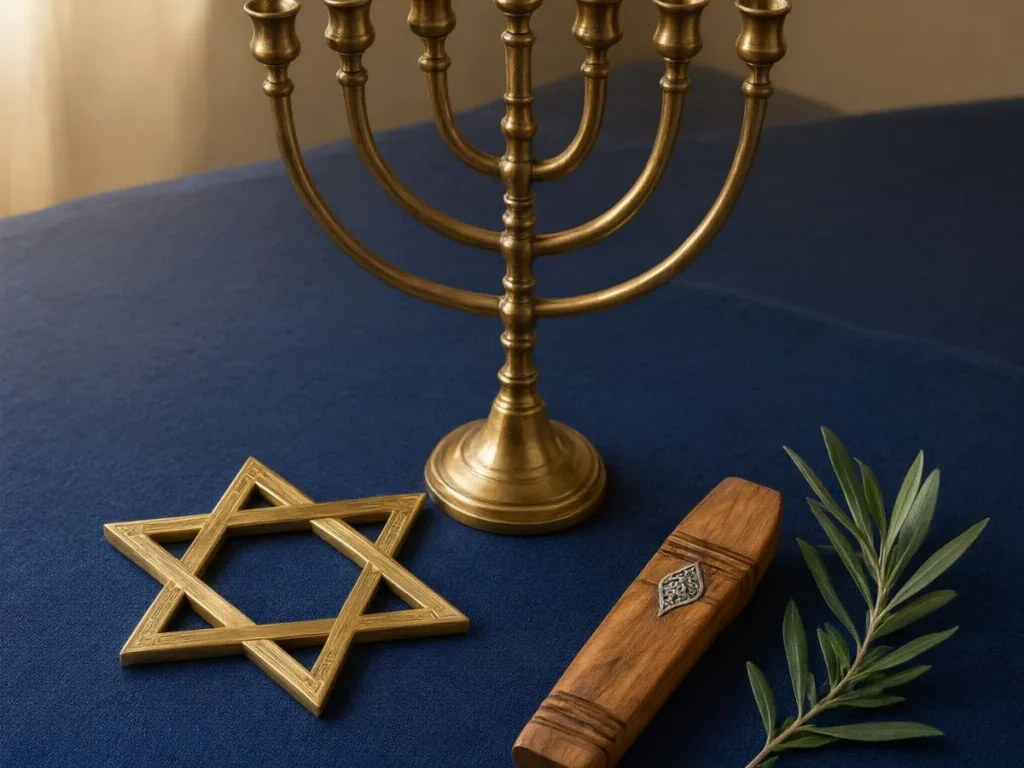
The Dove has biblical significance throughout Jewish tradition. After the flood, Noah’s dove returned with an olive leaf, signaling hope and the renewal of life.
Because of this story, the dove has become a lasting symbol of peace, reconciliation, and God’s care.
Its gentle appearance makes it popular for family art and meaningful gifts.
Best for: Logos, family artwork, memorial designs, inspirational art
Pomegranate: Blessing and Abundance
The Pomegranate appears throughout Jewish tradition as a symbol of abundance, beauty, and righteous living.
Jewish tradition often connects the fruit with the many commandments found in the Torah, making it a reminder of spiritual growth and faithful living.
Its rich color and detailed shape also make it a favorite in decorative art and jewelry.
Best for: Jewelry, home décor, holiday decorations, cultural artwork
Tree of Life: Wisdom and Growth
The Tree of Life symbolizes wisdom, spiritual growth, learning, and enduring faith. In Jewish thought, it is often connected with the Torah as a source of life and guidance.
Its roots suggest stability, while its branches represent growth across generations.
Many families also appreciate it as a symbol of ancestry and lasting legacy.
Best for: Family art, tattoos, genealogy projects, spiritual décor
Mezuzah: Faith at Home
A Mezuzah is a small case attached to the doorpost of many Jewish homes. Inside is a handwritten parchment containing verses from Deuteronomy.
The Mezuzah serves as a daily reminder of faith, love for God, and the importance of living according to Jewish teachings.
It is one of the most meaningful symbols found in everyday Jewish life.
Best for: Home entrances, family traditions, housewarming gifts
Hebrew Letter Shin: God’s Name
The Hebrew letter Shin (ש) appears on many Mezuzah cases and sometimes on ritual objects.
It stands for one of the names of God, Shaddai, reminding believers of God’s watchful care and protection.
Because of its elegant appearance and deep spiritual meaning, Shin is also used in jewelry and artistic calligraphy.
Best for: Spiritual jewelry, Hebrew art, meaningful tattoos
Best Jewish Symbols and Meanings for Tattoos
Many people choose Jewish-inspired tattoos because they reflect faith, family history, or personal values.
Before selecting one, it’s wise to understand its religious significance, as some observant Jews discourage tattooing based on traditional interpretations of Jewish law.
Popular tattoo choices include:
- Star of David
- Chai
- Lion of Judah
- Tree of Life
- Hebrew Letter Shin
- Hamsa (when used respectfully)
Simple line designs often age well and remain easy to recognize.
Best Jewish Symbols for Logos and Design
For branding, educational projects, or creative artwork, simplicity works best.
Good design choices include:
- Star of David
- Menorah
- Chai
- Tree of Life
- Dove
- Pomegranate
These symbols are visually clear and carry meaningful stories. When designing logos or products, avoid altering sacred symbols in ways that could be viewed as disrespectful.
Best Jewish Symbols for Family, Spiritual, or Personal Meaning
If your goal is personal inspiration rather than decoration alone, choose a symbol that matches your values.
- Family heritage: Tree of Life, Star of David
- Faith: Menorah, Torah Scroll, Mezuzah
- Hope: Dove, Chai
- Protection: Hamsa, Shin
- Strength: Lion of Judah
- Growth: Pomegranate, Tree of Life
The most meaningful symbol is often the one that reflects your own story while honoring its original tradition.
Before Using Cultural or Sacred Symbols
Many Jewish symbols have deep religious significance. Before using them in tattoos, commercial products, logos, or artwork, take time to understand their history and purpose.
A design that seems decorative may hold sacred meaning for practicing Jews. Respecting cultural and religious traditions helps prevent misunderstandings and honors the communities that have preserved these symbols for centuries.
How to Choose the Right Symbol
When selecting a Jewish symbol, consider these questions:
- Does it reflect your personal values?
- Do you understand its history?
- Is it appropriate for your intended use?
- Will the design remain clear at a small size?
- Are you honoring the symbol respectfully?
Choosing with knowledge creates a design that remains meaningful for years to come.
FAQs
What is the most recognized Jewish symbol?
The Star of David is the most widely recognized symbol of Judaism.
It represents Jewish identity, unity, and heritage and appears on the Israeli flag, synagogues, jewelry, and educational materials around the world.
What is a meaningful Jewish tattoo?
Many people choose the Chai symbol, Star of David, Tree of Life, or Lion of Judah because each reflects faith, identity, hope, or courage.
Before getting a tattoo, it’s helpful to understand the religious views surrounding tattooing in Judaism.
Which Jewish symbol represents protection?
The Hamsa and the Hebrew letter Shin are commonly associated with protection.
The Mezuzah also serves as a daily reminder of God’s care and blessing over the home.
What symbol represents life in Judaism?
The Hebrew word Chai, meaning “life,” is one of the most cherished Jewish symbols.
It reminds people to value life, gratitude, compassion, and meaningful relationships.
Can non-Jewish people use Jewish symbols?
Yes, many people appreciate Jewish symbols respectfully for educational, artistic, or cultural reasons.
However, it is important to understand their origins and avoid using sacred symbols in ways that could misrepresent or disrespect Jewish traditions.
Conclusion
Learning about Jewish symbols and meanings reveals far more than beautiful designs.
Each symbol carries centuries of history, faith, culture, and hope.
If you are choosing a meaningful tattoo, creating artwork, researching Jewish heritage, or simply satisfying your curiosity, taking time to understand these symbols helps you appreciate their true significance and use them with respect.

 Ethan Caldwell
 Dylan Prescott