Have you ever wondered why Hindu religious symbols carry such deep spiritual and cultural meaning across generations?
Hindu Religious Symbols represent more than just sacred images; they reflect ancient beliefs, divine connections, spiritual teachings, and important aspects of Hindu tradition.
From symbols of protection and prosperity to those representing creation, wisdom, and inner peace, each symbol holds a unique story and purpose.
Understanding their meanings can help you appreciate the rich symbolism behind Hindu practices and beliefs.
In this article, you will explore the origins, spiritual significance, cultural importance, and common interpretations of these powerful symbols.
Quick Answer: What Symbol Represents Hinduism?
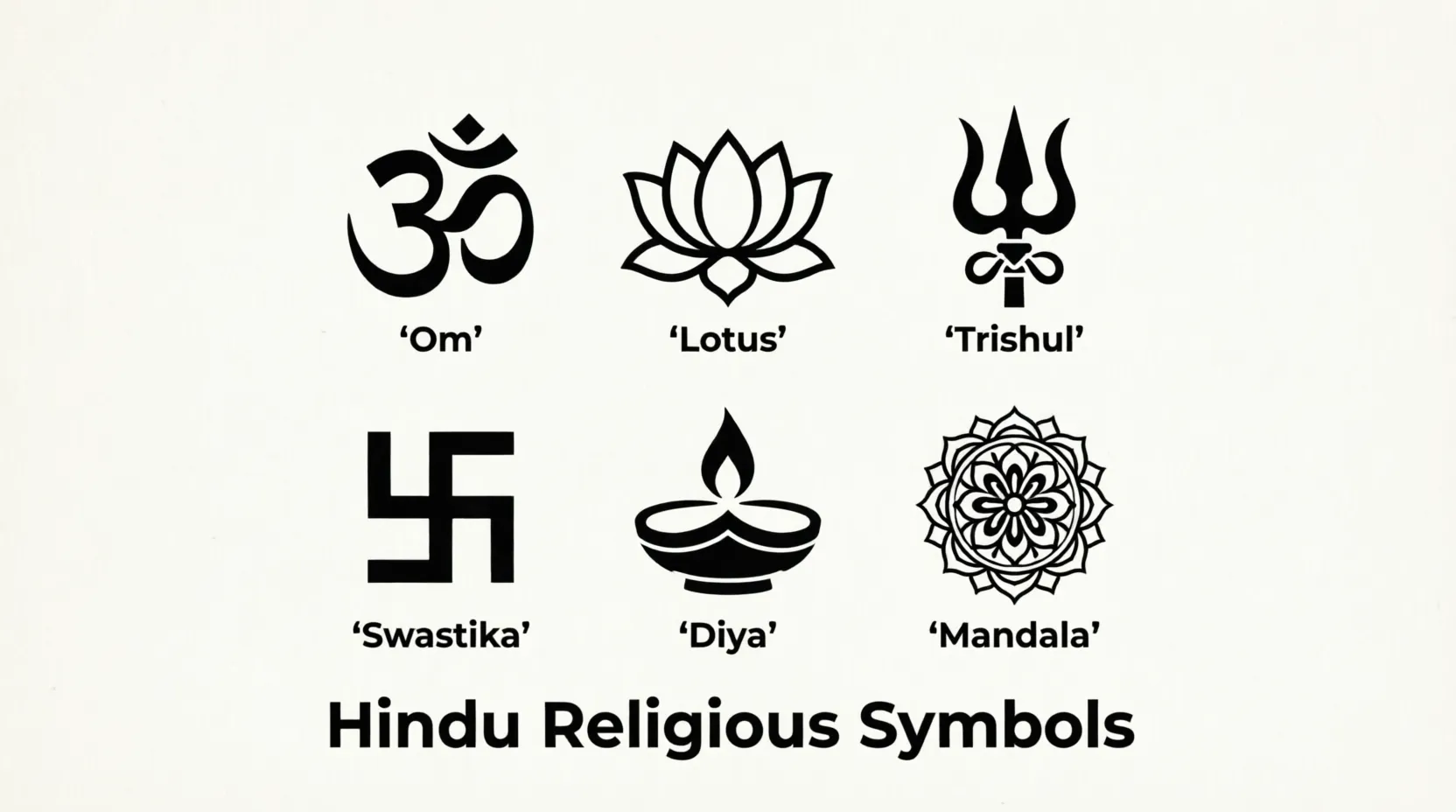
The most widely recognized symbol of Hinduism is Om (ॐ). It is considered the sacred sound of the universe and symbolizes the divine, creation, and spiritual awareness.
Other important Hindu religious symbols include the Lotus, Swastika (in its ancient Hindu form), Trishul, Tilak, Kalash, Conch Shell, and Nandi, each carrying unique religious and cultural meanings.
What Are Hindu Religious Symbols?
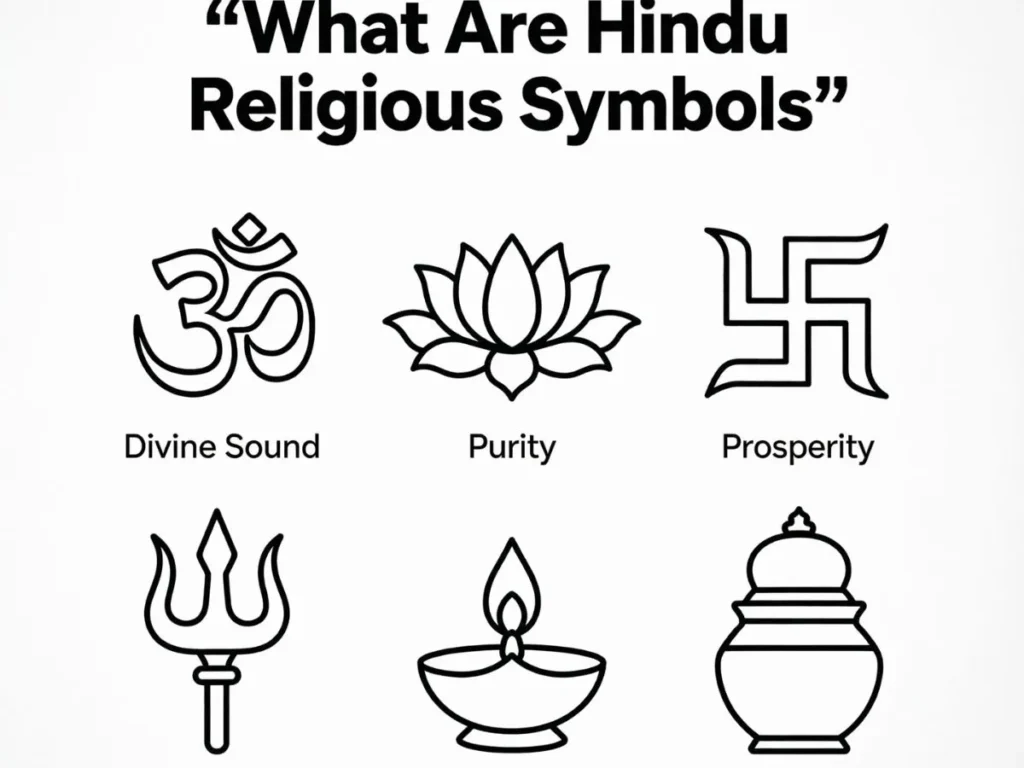
Hindu religious symbols are visual signs that express spiritual beliefs, sacred teachings, divine qualities, and cultural traditions within Hinduism. These symbols appear in temples, homes, festivals, scriptures, jewelry, paintings, and personal devotional items.
Their meanings often go beyond a simple image. A single symbol may represent wisdom, protection, purity, prosperity, or devotion depending on how and where it is used.
It’s also important to remember that meanings can vary across different Hindu traditions, regions, and communities.
While some symbols are universally recognized, others have special significance in particular temples, families, or spiritual practices.
Hindu Religious Symbols Comparison Table
| Symbol | Main Meaning | Best Use |
| Om (ॐ) | Divine sound and spiritual unity | Meditation, tattoos, jewelry |
| Lotus | Purity and spiritual growth | Art, tattoos, home décor |
| Swastika (Hindu) | Good fortune and blessings | Religious ceremonies, decorations |
| Trishul | Divine power and protection | Spiritual artwork, pendants |
| Tilak | Faith and devotion | Religious practice |
| Kalash | Prosperity and abundance | Festivals, home worship |
| Shankha (Conch) | Victory and sacred sound | Temples, rituals |
| Nandi | Loyalty and devotion | Temple art, sculptures |
| Diya | Light over darkness | Festivals, home decoration |
| Chakra | Cosmic order and righteousness | Logos, spiritual artwork |
| Peepal Leaf | Wisdom and life | Nature-inspired designs |
| Cow | Compassion and nourishment | Religious artwork |
Top Hindu Religious Symbols and Their Meanings
Om (ॐ): The Sacred Sound
Om is the most sacred symbol in Hinduism. It is believed to be the original sound from which the universe began. Many prayers, chants, and meditation sessions begin with Om because it reminds believers of the connection between the individual soul and the divine.
Today, Om appears on necklaces, wall art, yoga spaces, and tattoos. While it has become popular worldwide, it deserves respectful use because of its deep religious importance.
Best for: Meditation tattoos, jewelry, prayer rooms, spiritual art, yoga spaces.
Lotus: Purity Rising Above Life’s Challenges
The lotus flower grows from muddy water yet blooms beautifully above the surface. Because of this, it symbolizes purity, wisdom, spiritual awakening, and personal growth.
Many Hindu deities, including Lakshmi and Saraswati, are shown seated on a lotus. The flower reminds believers that goodness and wisdom can grow even during difficult times.
Its graceful appearance also makes it one of the most popular Hindu-inspired tattoo and design choices.
Best for: Tattoos, family artwork, jewelry, meditation spaces, decorative designs.
Swastika: A Sacred Sign of Good Fortune
In Hinduism, the swastika is an ancient symbol of prosperity, well-being, and good luck. It has been used for thousands of years in religious ceremonies and festivals.
It is very important to distinguish the traditional Hindu swastika from the symbol later misused by the Nazi regime during the twentieth century. In Hinduism, it remains a sacred religious symbol associated with blessings and positive energy.
Best for: Religious ceremonies, home entrances, festival decorations, prayer spaces.
Trishul: The Trident of Lord Shiva
The Trishul, or trident, is closely associated with Lord Shiva. Its three points are commonly understood to symbolize creation, preservation, and destruction, as well as balance between body, mind, and spirit.
The Trishul reminds believers that life constantly changes and that spiritual growth comes through accepting these changes.
Many people wear Trishul pendants as expressions of faith.
Best for: Pendants, spiritual tattoos, temple art, devotional designs.
Tilak: A Mark of Faith
The Tilak is the sacred mark placed on the forehead during worship or religious ceremonies. Different Hindu traditions use different shapes and colors, each reflecting devotion to a particular deity or spiritual path.
Rather than serving as decoration alone, the Tilak reminds believers to focus on spiritual awareness and humility.
Best for: Religious ceremonies, devotional practice, festival traditions.
Kalash: The Vessel of Prosperity
The Kalash is a decorated metal pot filled with water and topped with mango leaves and a coconut. It symbolizes abundance, fertility, life, and divine blessings.
It plays an important role during weddings, housewarming ceremonies, festivals, and temple rituals.
Its elegant appearance also inspires decorative artwork celebrating prosperity.
Best for: Festivals, wedding décor, religious artwork, home altars.
Shankha (Conch Shell): The Sacred Call
The conch shell is blown during Hindu worship to mark the beginning of prayer. Its sound is believed to create a peaceful atmosphere and inspire spiritual focus.
Many Hindu scriptures associate the conch with Lord Vishnu, whose divine conch symbolizes righteousness and protection.
Its spiral shape also represents the ongoing cycle of life.
Best for: Temple rituals, spiritual décor, ceremonial artwork, religious collections.
Nandi: Loyalty and Devotion
Nandi, the sacred bull of Lord Shiva, symbolizes unwavering devotion, patience, strength, and faithfulness.
Visitors to Shiva temples often offer prayers before the statue of Nandi, believing he carries their devotion to Shiva.
Nandi also reminds people that true strength often comes through humility and faithful service.
Best for: Temple sculptures, home shrines, spiritual artwork, devotional collections.
Diya: Light Over Darkness
The diya is the traditional oil lamp lit during worship and festivals such as Diwali. It represents wisdom overcoming ignorance and hope replacing fear.
Lighting a diya reminds believers that even one small light can brighten darkness.
Its simple beauty has made it a timeless decorative symbol in Hindu homes.
Best for: Festival decorations, home worship, spiritual artwork, family celebrations.
Chakra: Balance and Righteous Living
The chakra, or divine wheel, symbolizes cosmic order, time, and righteous action. Different forms of the chakra appear throughout Hindu traditions and sacred art.
Circular designs often represent the continuous movement of life and the importance of living according to moral principles.
Its clean geometric shape also works well in modern design.
Best for: Logos, educational graphics, meditation artwork, jewelry.
Peepal Leaf: Wisdom and Spiritual Growth
The Peepal tree holds special importance in Hindu tradition and is often associated with wisdom, life, and divine presence.
Its heart-shaped leaves inspire artwork that celebrates growth, learning, and harmony with nature.
Best for: Nature-inspired tattoos, artwork, wall décor, educational projects.
Cow: Compassion and Nourishment
The cow is honored in Hinduism as a symbol of compassion, generosity, and life-giving nourishment. It reflects the values of kindness, care, and respect for living beings.
Its image often appears in religious paintings and devotional art.
Best for: Religious illustrations, educational materials, spiritual artwork, cultural displays.
Best Hindu Religious Symbols for Tattoos
Many people choose Hindu-inspired tattoos because they reflect personal faith, mindfulness, or spiritual values. Before selecting one, take time to understand its religious meaning and whether it is appropriate for body art.
Popular tattoo choices include:
- Om
- Lotus
- Trishul
- Chakra
- Peepal Leaf
- Simple Diya outline
Smaller designs often work well on the wrist, ankle, or forearm, while larger pieces may incorporate lotus flowers or sacred geometric patterns.
Best Hindu Religious Symbols for Logos and Design
Some Hindu-inspired symbols are visually simple and meaningful, making them suitable for educational, cultural, or spiritual designs.
The Lotus, Chakra, Diya, and Peepal Leaf are often preferred because of their clean shapes and broad symbolism.
When designing logos, posters, or social media graphics, keep the artwork simple, balanced, and respectful. Sacred symbols should never be altered in ways that mock or misrepresent their religious importance.
Best Hindu Religious Symbols for Family, Spiritual, or Personal Meaning
Different symbols speak to different personal values.
- Family harmony: Kalash, Diya
- Inner peace: Om, Lotus
- Faith and devotion: Tilak, Nandi
- Protection: Trishul
- Prosperity: Swastika (traditional Hindu form), Kalash
- Personal growth: Peepal Leaf, Lotus
- Balance: Chakra
Choosing a symbol based on your personal journey often creates deeper meaning than simply selecting one because it looks attractive.
Before Using Cultural or Sacred Symbols
Many Hindu religious symbols are sacred objects of worship, not simply decorative designs.
Before using one in a tattoo, logo, product, or artwork:
- Learn its religious meaning.
- Respect its cultural background.
- Avoid placing sacred symbols in inappropriate contexts.
- Remember that interpretations may differ among Hindu traditions and communities.
Taking time to understand these symbols shows appreciation rather than appropriation.
How to Choose the Right Symbol for Hinduism
The right symbol depends on your purpose.
If you want daily spiritual inspiration, Om or the Lotus may be meaningful choices.
For family celebrations, the Kalash and Diya beautifully express blessings and unity.
If you’re creating a logo or artwork, choose a simple design that remains recognizable without losing its sacred identity.
Above all, select a symbol because you understand and respect its meaningnot simply because it is popular.
FAQs
What is the best symbol for Hinduism?
Om is generally considered the most recognized symbol of Hinduism because it represents the sacred sound of creation and spiritual unity.
What symbol represents protection in Hinduism?
The Trishul is commonly associated with protection, courage, and the divine power of Lord Shiva.
What is a good Hindu religious symbol tattoo?
The Lotus, Om, Chakra, and Trishul are popular choices. Before getting one, learn its religious meaning and consider whether it is appropriate for permanent body art.
Which Hindu symbol represents peace?
Om is often connected with inner peace and meditation. The Lotus also reflects calmness, purity, and spiritual growth.
What is the simplest Hindu religious symbol?
Om is one of the simplest and most recognizable Hindu symbols. Its elegant design makes it popular in jewelry, artwork, and meditation spaces.
Which Hindu symbol represents prosperity?
The Kalash symbolizes abundance and blessings. The traditional Hindu swastika is also an ancient symbol of good fortune when understood within its original religious context.
Can Hindu symbols be used in logos?
Yes, but respectfully. Simple symbols like the Lotus or Chakra are generally more suitable for educational or cultural designs than highly sacred ritual symbols.
What colors are commonly associated with Hindu symbols?
Saffron, red, gold, white, and deep blue frequently appear in Hindu religious art. Their meanings vary but often relate to purity, devotion, wisdom, and spiritual energy.
Final Thoughts
Learning about Explore Hindu religious symbols and discover their meanings, spiritual significance, cultural importance, and sacred connections in Hindu traditions.religious symbols offers more than an introduction to beautiful designs it opens a window into one of the world’s oldest living spiritual traditions.
Whether you’re interested in their meanings, considering a tattoo, creating meaningful artwork, or simply expanding your knowledge, taking time to understand these sacred symbols helps you appreciate their cultural and religious significance with respect and care

Dylan Prescott is an experienced American writer at BlogShubb. He specializes in technology, digital trends, and online guides. His well-researched articles help readers understand complex topics in a simple, clear, and practical way.
 Owen Bradford